
Globally Nashville is synonymous with country music, honky tonks and the neon signs of lower Broadway.
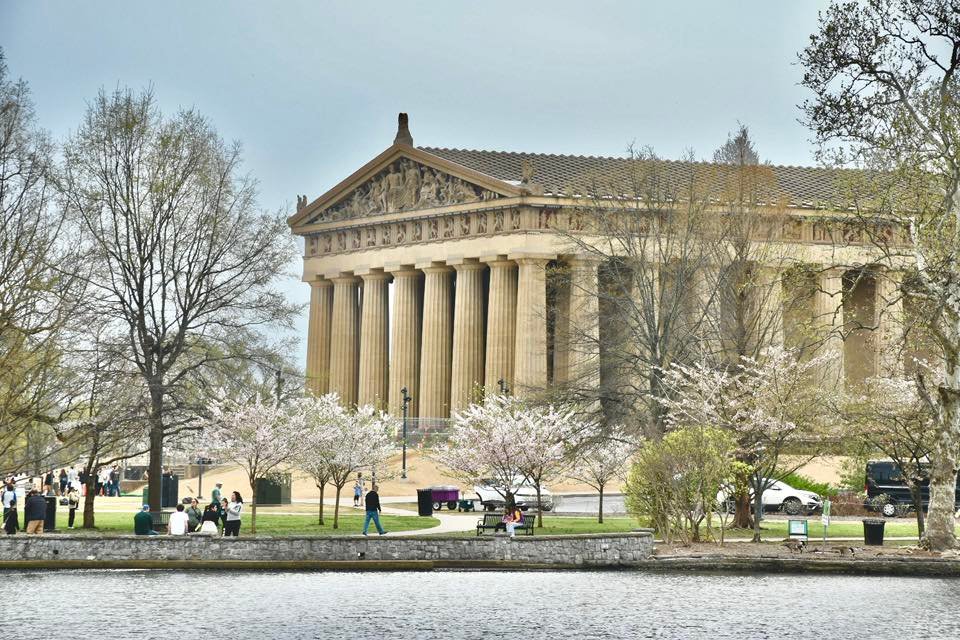
So it comes as a bit of a surprise, after driving a few miles west of downtown to see what looks like an ancient Greek temple dominating a city park.
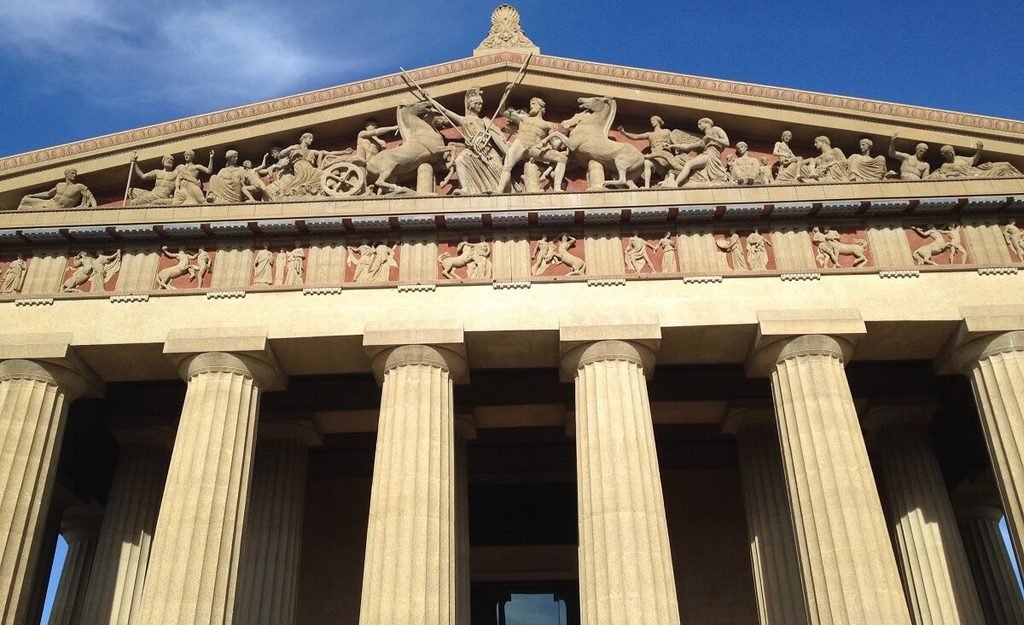
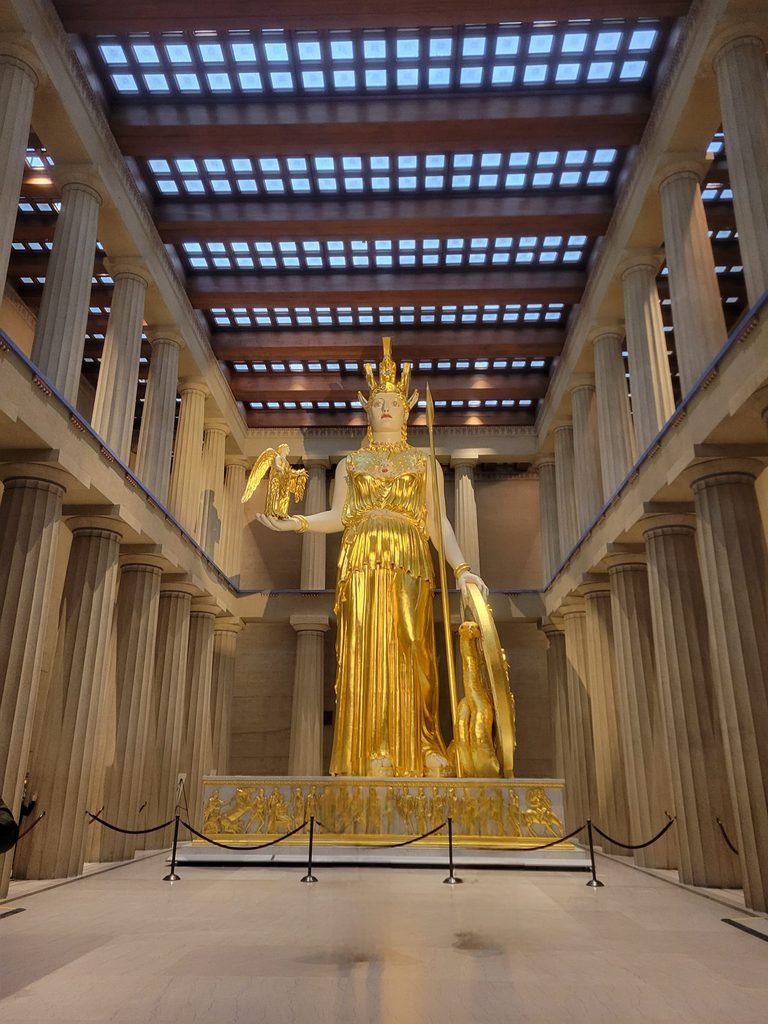
The Parthenon in Nashville’s Centennial Park is a recreation of the famous Parthenon in Athens of Greece, scaled 1 to 1. Massive pillars surround it in the park and within one finds a gigantic statue (42 feet high) of the Greek goddess Athena.
To outsiders, this may sound as an absolute anachronism in Music City.
However far-fetched, there is an ACTUAL reason for its erection in Tennessee.
But it has been around for far longer than most visitors assume.
It Started With Tennessee’s Centennial Celebration
We will start all the way back with the Tennessee Centennial and International Exposition of 1897.
This huge fair was to be a celebration of 100 years since Tennessee had become a state. Strictly, Tennessee’s centennial fell in 1896, but because of the financial troubles following the 1893 Panic the exposition was held a year later, explains Nashville Public Library’s Metro Archives.
At the same site where Centennial Park would develop, elegant exhibition buildings were constructed featuring exhibits related to Tennessee’s progress, culture and ambitions.
Most of them were temporary.
Example: the Parthenon.
It was originally constructed from more temporary elements, such as plaster, as it was never intended to be left standing, as it served as the Fine Arts Building for the exposition and became once of the biggest attractions of the event.
But the organizers had a good reason why they chose a Greek temple.
Nashville Was Already Known as the “Athens of the South”
The Parthenon was not an odd piece of architecture one saw as an attractive world’s fair building.
“By the late 1800s, Nashville was being looked at to fill that spot for that region in the US, a location that is coming to becoming an education hub.”
Vanderbilt University, Fisk University, The University of Nashville and Peabody, along with Meharry Medical College provided the city of Nashville with a comparatively strong academic backbone for the region.
That strong connection with education was how Nashville had already come to be known as the “Athens of the South.”
When Tennessee planned an overwhelming centennial celebration, a replica of Athens’ proudest building was clearly in order.
In turn, the Parthenon perfectly visualized a common moniker Nashville already possessed.
More than 100 years later, the nickname goes largely unused in favor of “Music City,” but the building is still here.
The First Parthenon Wasn’t Supposed to Last
But what is most interesting about Nashville’s Parthenon is that technically the building that is there today was not for the 1897 Exposition.
This temporary version, surprisingly, remained immensely popular.
After the exposition was over, instead of tearing it down, Nashville allowed it to remain in the park.
One trouble: It never did intend to stay alive that long.
In the beginning of the 20th century the original structure was in a severe state of deterioration. Nashville decided to construct a permanent replacement.
In the 1920s a work began in replacing Exposition materials first of all by reinforced concrete, this replica was ready in 1931.
The team architect, Russell E. Hart, worked on reconstructing the Parthenon while architect and archaeologist, William Bell Dinsmoor, studied its original ruins in Greece due to Hart working on reconstructing a replica of the original temple on the Acropolis in Greece.
The effect was not to be a vaguely Greek-looking building.
Its measurements have been accurately reproduced from those of the ancient Parthenon.
Today, even the Parthenon’s own museum, the only one in the world dedicated to one structure, touts Nashville’s version as the world’s only exact-size replica of the original in Athens.”
That is what makes walking ’round it such an interesting prospect.
No matter how many close up photographs you have seen nothing really prepares you for the massiveness of what must have been the original Greek temple.
Then There’s Athena
This is impressive from the outside, but you will be in for the biggest surprise once you are inside!
A full-scale, 42-foot-tall copy of Athena – the goddess standing firmly in the original Parthenon in ancient Athens, stands at the main room today. Metro Nashville says that both the building and the goddess statue are recreations of what they were in the ancient years.
Nashville’s Athena is created by a local sculptor Alan LeQuire and unveiled in 1990.
The statue completely changes the scale of the interior.
It is one thing to read that Athena is 42 feet tall.
It is another standing at the floor looking up into her face.
“In the same space sit plaster casts related to fragments of sculpture from the original Parthenon, allowing the Greek to relate to his original building.”
For visitors who assume there is not much and wander around the exterior; this is where it is at!
The Parthenon Is Also an Art Museum
Nor is it that it contains some architecturally curious objects which have been preserved.
It is also the Nashville art museum.
Donated by James M. Cowan, between are 63 works from 19th and 20th century American artists which form its permanent collection, while other gallery spaces are used for temporary exhibitions.
The Parthenon therefore has these two distinct identities.
You might like to go because you are fascinated by Ancient Greece and architecture; or you might choose to visit just as you would an art museum.
Most people probably end up doing a little of both.
Centennial Park Is Worth Exploring Too
The site of the Parthenon in Athens does not restrict a quick trip there as I found when returning after an absence of several years
The location makes the Parthenon especially easy to visit; it is the focus of Centennial Park 2500 West End Avenue, one of Nashville’s best-known public parks.
The park itself is free and currently open for everyone from Dawn to 11 p.m. Every day.
The upshot is you do NOT have to buy a museum ticket to simply wander around and see the Parthenon.
You can see the Parthenon from the exterior, wander the grounds, photograph and enjoy the building without paying anything at all.
As well as the expanse of lawn allowing distance to appreciate the enormous size, it’s far more difficult standing next to columns to truly see and understand the structure above you.
If you are already in the area around West End, Vanderbilt or other parts nearby then it will be an easy addition to the day.
How Much Does It Cost to Go Inside?
Access to the Parthenon in September 2026 is:
- Adults: $15
- Over age 62 (seniors): $10
- Youth (ages 4-17): $10
- Below 4’s: Free
People who buy admission are doing it on site, than in advance. The museum participates in number of discount and free-admission programmes too.
Regular hours are currently:
- Monday to Saturday: 9am – 4:30pm
- Sunday: 12:30 p.m. to 4:30 p.m.
Hours for Holidays and special events vary so it is better to visit the Parthenon official site before you plan a special visit during national holidays or other important special days.
Is Nashville’s Parthenon Worth Visiting?
I think it all depends on what you expect from it.
If however you are expecting a big museum that will take up most of the day, this probably is not that.
But the actual draw is the combination of the building, Athena, Centennial Park, The Art Collection which makes for some history.
It’s also one of those Nashville attractions that has more punch when you understand why it is here.
And if you do not know the history, it is an easy building to look at and think Nashville simply randomly decided to build a Greek temple.
But learning about the city’s past “Athens of the South” and the magnitude of the Exposition, the Parthenon starts to be part of a much bigger story in Nashville.
Quick Facts About Nashville’s Parthenon
Location: Centennial Park: 2500 West End Ave., Nashville
First temporary Parthenon: 1897
Reason for construction: Tennessee Centennial and International Exposition
Permanent reconstruction completed: 1931
The Athena statue: 42 feet high
Athena sculptor: Alan LeQuire
Athena unveiled: 1990
Current use Art museum Historic attraction Architectural landmark
Interesting Fact of why Nashville has the Parthenon
Because Nashville is known as the “Athens of the South,” this is why they had a Parthenon.
One of Nashville’s Most Unexpected Landmarks
Nashville has certainly seen many changes since 1897 when the Centennial Exposition opened.
Today the city is known much more as “Music City” than “the Athens of the South”.
However, when we think of Nashville today, we think of Music, not the Athens of the South, although it still has the Parthenon in Centennial Park.
And this is part of why it is worth looking at.
Along Broadway and inside the Ryman and Grand Ole Opry, it tells a more familiar story to most visitors already interested in Nashville.
The Parthenon tells another one entirely (about education, civic ambitions, great 19th century expositions and a temporary building Nashville liked so much it decided to make permanent).
Over a hundred years later, you can still pose beneath its exterior as long as you like or walk inside to see Athena and still only travel a few minutes down the road to get into modern Music City.
And there are not too many places in the world where ancient Greece and Nashville, Tennessee, fit so snugly into the same afternoon.