
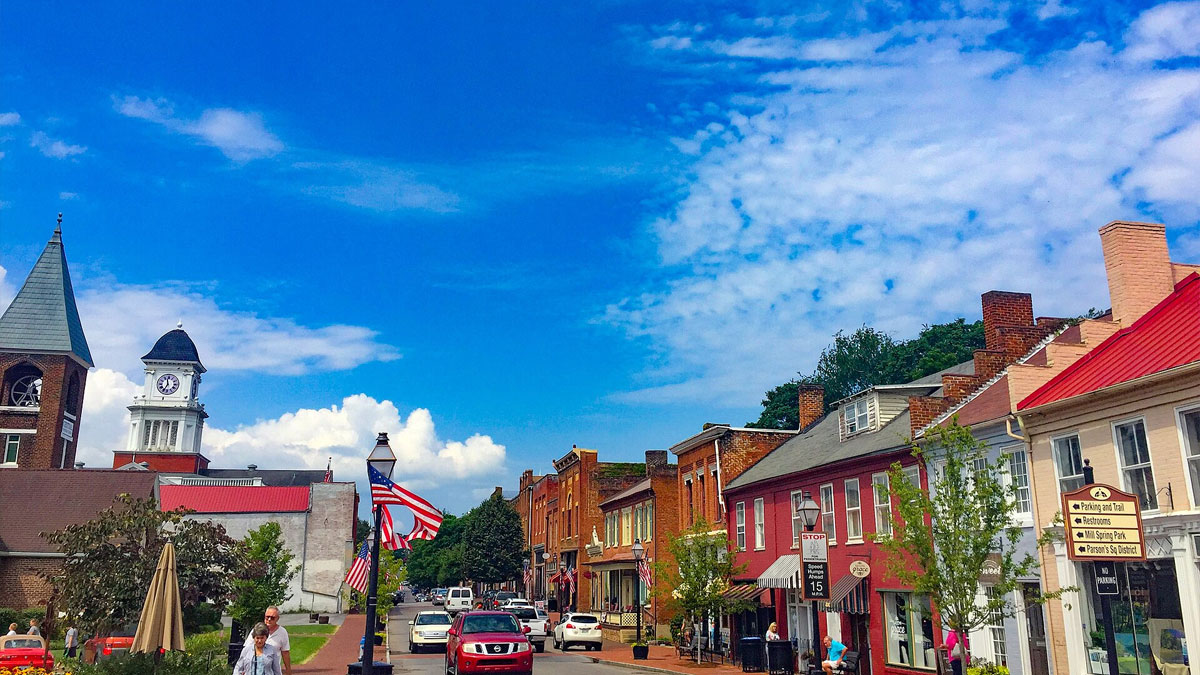

Tennessee gained about 116 people a day from other states last year, and a woman outside Nashville just wrote the state’s obituary.
“Tennessee is dead. At least the Tennessee I grew up in is,” Kennedy Kemp wrote in a Facebook post on Nov. 18. By the time the Tennessean wrote about it, it had about 2,800 likes, more than 700 comments and roughly 866 reposts.
Kemp told the paper about 40 people had messaged her privately. Only one was negative.
That’s a lot of agreement for a post about chain restaurants. But anyone who’s watched a meat-and-three turn into a mattress store knows it was never really about the restaurants. Plenty of newcomers learn the hard way that Tennessee runs on its own habits, and longtime locals feel it when those habits fade.
So we went looking for the numbers behind the feeling. Some of them back Kemp up. A few of them might surprise her.
The Obituary Has 402,757 New Neighbors
The U.S. Census Bureau puts Tennessee at 7,315,076 people as of July 1, 2025. Its starting point for the decade was 6,912,319.
Do the subtraction and you get 402,757 more Tennesseans in a little over five years. That’s more people than live in all of Rutherford County.
Most of that growth comes from people moving in from other states. The Tennessee State Data Center at UT counted a net 42,389 domestic movers in 2025, fourth in the country behind North Carolina, Texas and South Carolina.
But the flood is slowing. That 2025 number was the third straight year below the 2022 record, and the Data Center says domestic moves look to be “settling back towards pre-pandemic norms.”
So the rush that made so many locals feel like strangers in their own grocery store has already peaked.
Why Trousdale Feels It More Than Nashville
Raw numbers make Davidson County look like the epicenter. It added 9,281 people from 2024 to 2025, more than any other county, according to the Data Center’s county breakdown.
The percentages tell a different story.
| County | 2024 to 2025 gain | Growth rate |
|---|---|---|
| Trousdale | 434 people | 3.6% |
| Maury | 3,675 people | 3.2% |
| Van Buren | 191 people | 2.9% |
| Wilson | 4,693 people | 2.8% |
| Davidson | 9,281 people | 1.3% |
Our read: 434 new people in Hartsville sounds small until you scale it. If Davidson grew at Trousdale’s rate, Nashville would have added about 26,000 people in a year, close to three times what it actually added.
That’s why the “Tennessee is dead” feeling isn’t only a Nashville thing. The Data Center found the state’s 78 rural counties have matched or beaten the growth rate of its 17 urban counties every year this decade. In Van Buren County, one of the smallest in the state, 191 newcomers is enough to change who you see at the post office.
Nearly Four Farms a Day Disappeared, but the Land Mostly Didn’t
Kemp’s post mourned family businesses. On the farm side, the numbers are real.
The USDA counted 69,983 Tennessee farms in 2017 and 63,105 in 2022, a 9.8% drop, according to a UT Center for Profitable Agriculture summary of the federal Census of Agriculture. That works out to 6,878 fewer farms, or nearly four a day.
This part surprised us. Land in farms barely moved, dropping just 1.3%, from about 10.87 million acres to 10.73 million.
So most of that farmland didn’t turn into subdivisions overnight. A lot of it changed hands and got folded into other operations. That’s still a loss for the families who sold. But “fewer farmers” and “no more farmland” aren’t the same problem, and they don’t have the same fix.
Nashville Already Buried the Mother Church Once
Tennesseans have written this obituary before.
In 1974, the Grand Ole Opry played its last show at the Ryman Auditorium on March 15 and moved to a new, bigger theater. The Ryman sat mostly empty for almost 20 years, and demolition rumors spread around downtown.
Locals didn’t let it go. Community groups and lawmakers pushed to “save the Ryman,” the owner reconsidered its demolition plans, and renovations started in 1989. It reopened in June 1994 and became a National Historic Landmark in 2001.
Today it’s one of the most famous stages on earth. It came back because people kept showing up for it.
Some losses don’t come back. The original town of Butler went under Watauga Lake after TVA began filling the reservoir in December 1948, one of many Tennessee communities lost to reservoir construction. Grief like Kemp’s has deep roots here.
Our Read: Tennessee Isn’t Dead, It’s Under-Visited
Kemp told the Tennessean, “I’m missing being able to walk into a restaurant and know all your neighbors or your friends are going to be there.”
We get it. But the places that make that possible still exist, and the state keeps lists of them.
The Tennessee Century Farms Program has certified more than 2,300 farms owned by the same family for at least 100 years. When the program’s first book came out in 1986, it identified 783, according to MTSU.
The Tennessee Main Street program now counts 50 downtowns, from Jonesborough and Greeneville to Paris and Tiptonville. To get in, a town needs historic commercial buildings, a walkable district and what the state calls “a strong historic preservation ethic.”
The old Tennessee isn’t gone. It’s mostly just off the interstate, waiting for customers.
How to Keep Your Tennessee Alive This Weekend
If Kemp’s post hit you in the gut, here’s what you can actually do about it.
- Find a century farm in your county. The Century Farms database lets you search by county, year founded or farm name. It’s a free way to see which families near you have worked the same land for 100 years or more.
- Buy straight from a Tennessee producer. Pick Tennessee Products has nearly 3,200 members and an interactive finder for farms, artisans and farm experiences. Call ahead before you drive out.
- Spend a Saturday in a Main Street town. Pick one of the 50 and eat lunch somewhere without a drive-thru. Our list of Tennessee’s favorite small towns, according to locals is a good place to start.
- Back local buying close to home. Schools and county governments buy food too. Maury County Schools, in one of the fastest-growing counties in the state, recently added a local, family-owned beef supplier.
- Bring a newcomer with you. The 116 people a day moving here from other states didn’t come for another strip mall. Take your new neighbor to your favorite meat-and-three, and the regulars at that table grow by one.
Kemp ended her post on the “difference between growing a city and erasing everything that made people fall in love with it in the first place.” Which side of that line your town lands on depends a lot on where you spend your Saturday.
More from Real Tennessee Life…

Giordano’s Picks Pigeon Forge for Its First Tennessee Restaurant. Here’s Why the Parkway Won

Tennessee Returned a Record 169,303 Unclaimed Property Claims. So Why Did the Checks Get Smaller?