

Since the SEC started sending field-storming fines to the opposing school, rival fans celebrating wins over Tennessee have run up $1.5 million in penalties payable to the Vols.
Tennessee’s own fans? $600,000.
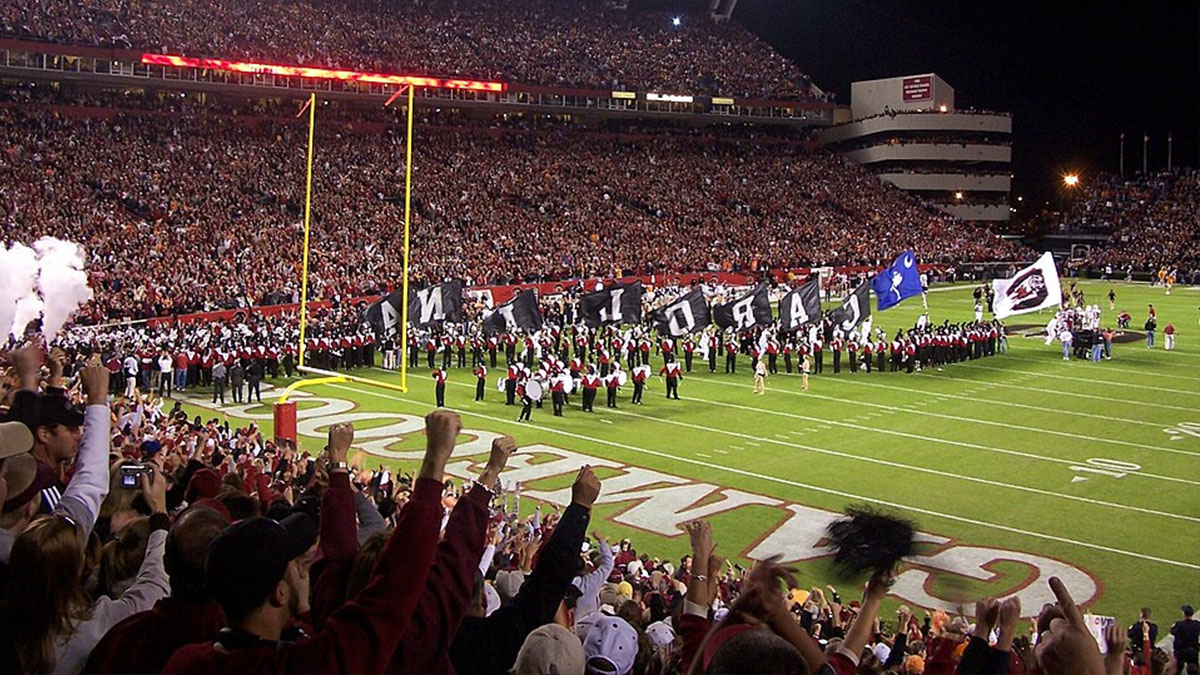
The newest entry came Sunday. The SEC fined South Carolina $500,000 after Gamecocks fans rushed the field following a 27–24 win over Tennessee, and the money is payable to Tennessee. One week earlier, Tennessee was fined the exact same amount after Vols fans stormed Neyland Stadium following the win over Alabama.
On paper, the two fines cancel out. But after building a ledger of every SEC field-storming fine we could document since 2005, I think the more interesting story is what the numbers say about Tennessee, and whether a $500,000 fine is really stopping anyone.
Two Games, Two $500,000 Fines
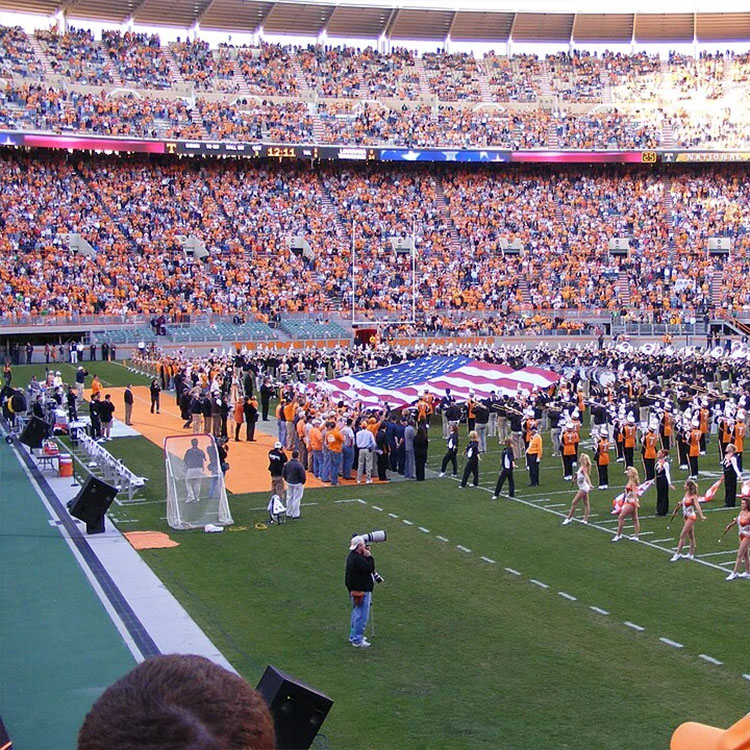
October 17, Knoxville: Tennessee beat Alabama, and Vols fans poured onto the field. The SEC fined Tennessee $500,000 the next day, payable to Alabama.
October 24, Columbia: South Carolina beat Tennessee 27–24, and Gamecocks fans did the same thing. The SEC announced a $500,000 fine on October 25, payable to Tennessee.
The Knoxville fine stung because Tennessee had tried to stop it. According to Adam Sparks of the Knoxville News Sentinel, athletic director Danny White appeared on Neyland’s video board late in the game and asked fans to stay in their seats until Alabama’s players and coaches had left. The school estimated that would take about two minutes.
Fans held back for a few moments. Then some began coming down near the student section while Alabama personnel were still walking off, and the rest followed.
That’s the whole problem. The SEC lets a school allow a postgame celebration only if it has submitted its procedures to the conference, communicated them to fans, and the visiting team and officials have safely left the field before anyone comes down. Asking fans to wait counts as an effort. It doesn’t count as compliance.
The two-minute figure was Tennessee’s estimate for that night, not an SEC rule. Under the current policy, the commissioner can reduce a fine to $100,000, but only if the school made a full attempt to stop the rush, few people got on the field, and there was minimal contact with the visiting team.
Tennessee’s Field-Storming Ledger
We went through SEC announcements and news reports going back to the policy’s start in December 2004. Here is every documented field or court storm involving Tennessee, on either side:
| Game date | Who stormed | Opponent | Sport | Fine | Payable to |
|---|---|---|---|---|---|
| Jan. 21, 2006 | Tennessee | Florida | Basketball | $5,000 | SEC scholarship fund |
| Oct. 15, 2022 | Tennessee | Alabama | Football | $100,000 | SEC scholarship fund |
| Nov. 19, 2022 | South Carolina | Tennessee | Football | $100,000 | SEC scholarship fund |
| Feb. 8, 2023 | Vanderbilt | Tennessee | Basketball | $250,000 | SEC scholarship fund |
| Oct. 5, 2024 | Arkansas | Tennessee | Football | $250,000 | Tennessee |
| Oct. 19, 2024 | Tennessee | Alabama | Football | $100,000 | Alabama |
| Jan. 18, 2025 | Vanderbilt | Tennessee | Basketball | $250,000 | Tennessee |
| Mar. 5, 2025 | Ole Miss | Tennessee | Basketball | $500,000 | Tennessee |
| Oct. 17, 2026 | Tennessee | Alabama | Football | $500,000 | Alabama |
| Oct. 24, 2026 | South Carolina | Tennessee | Football | $500,000 | Tennessee |
Why the Fine Is $500,000
Three things jump out.
Opponents storm after beating Tennessee more than Tennessee storms at all. Six times since 2022, a rival’s fans rushed the field or court after beating the Vols. Those fines total $1.85 million.
Tennessee was already owed $1 million before this week. Arkansas, Vanderbilt and Ole Miss fines were all payable to Tennessee. South Carolina’s brings the total to $1.5 million. These are amounts the SEC designated to Tennessee; we couldn’t confirm when or how the money actually changed hands.
Almost all of Tennessee’s own fines come from one opponent. Three home wins over Alabama in 2022, 2024 and 2026 brought three field storms and $700,000 in fines. The price of beating Bama at Neyland went from $100,000 to $500,000 in four years.
Tennessee’s first fine, for a 2006 basketball upset of Florida, was $5,000. Here’s how the SEC got from there to today:
| When | First offense | Second | Third and later | Where the money went |
|---|---|---|---|---|
| December 2004 | $5,000 | $25,000 | $50,000 | SEC scholarship fund |
| 2015 | $50,000 | Up to $100,000 | Up to $250,000 | SEC scholarship fund |
| June 2023 | $100,000 | $250,000 | $500,000 | The opposing school, for SEC games |
| May 2025 | Up to $500,000 for any violation | The opposing school, for SEC games |
The 2023 change mattered more than the dollar amounts. It gave every school a clean slate and started sending the money to the team that just lost. Under the current SEC regulations, a school can face a separate $500,000 penalty if fans rush early enough to disrupt the game.
Across the league, we documented 59 field and court storms since 2005, totaling about $9.1 million in assessed fines. Vanderbilt leads with eight, totaling $1.48 million.
Does $500,000 Actually Hurt?
It depends on what you compare it to. Using each school’s fiscal year 2025 financial report to the NCAA:
| School | Athletics expenses | Fine as share of expenses | Revenue left after expenses | Fine as share of that surplus |
|---|---|---|---|---|
| Tennessee | $288.2 million | 0.17% | $15.9 million | 3.1% |
| South Carolina | $203.3 million | 0.25% | $1.3 million | 38% |
For Tennessee, a $500,000 fine is a rounding error, less than two-tenths of one percent of what the athletic department spent in a year, according to Tennessee’s FY2025 NCAA financial report.
South Carolina’s picture is different. Its athletic department ended the year about $1.3 million ahead, so this fine equals more than a third of that cushion. South Carolina’s report also shows the university provided $29.3 million that year to support athletics operations.
One caution: last year’s surplus isn’t this year’s spare cash, and these reports don’t show who will actually pay a 2026 fine.
The SEC Charges More Than Any League We Checked
The SEC’s standard fine is the steepest published penalty among the major conferences we checked:
- SEC: Up to $500,000 for a violation, payable to the opponent in conference games.
- ACC: $50,000 for a first offense, $100,000 for a second and $200,000 for a third within a rolling two-year window.
- Big 12: Fines are case by case. Arizona State was fined $25,000 in 2024 and $50,000 in 2025 for early field entries.
- Big Ten: A private reprimand comes first, then a public one, with a possible fine only after a third violation.
That doesn’t prove the SEC is strictest on every measure, but among the published and documented penalties, nobody else comes close to $500,000.
My Take: Beating Tennessee Is Worth Storming Over
Let me be clear up front: nobody should rush a field while the other team is still on it. Players and staff can get hurt in those crowds. Wait until they’re off.
But the numbers tell a story Vols fans should enjoy. Six times since 2022, another SEC school’s fans decided a win over Tennessee was big enough to pour onto the field or court, even knowing it could cost their school six figures. You don’t storm the field after beating a team you expected to beat. That’s a backhanded compliment, and Tennessee has been collecting a lot of them.
On paper, it’s also been good business. Since the 2023 rule change, opponents’ celebrations have generated $1.5 million payable to Tennessee, while Tennessee’s own have cost $600,000.
What the numbers don’t show is a fine that changes behavior. Tennessee fans stormed after all three home wins over Alabama, and the penalty grew five times over in that stretch. For an athletic department spending nearly $290 million a year, $500,000 is a speeding ticket.
If the SEC’s real goal is safety, I’d argue the fine size matters less than one simple thing: whether the visiting team is off the field first. Tennessee’s video board request almost worked. Some fans moving too early is what turned it into a $500,000 penalty.
Before the Next Big Win at Neyland
- Watch the visiting team, not the clock. The SEC rule is about the other team and the officials being safely off the field, not a set number of minutes.
- Follow the video board. If the school gives instructions, those are the conditions it promised the SEC.
- Don’t go first. On October 17, the early movers set off everyone else, and that’s what made it a violation.
And if you’re heading to Knoxville for a game, there’s more to the day than the final whistle. Some Vols fans arrive by boat with the Vol Navy.
How We Built This Ledger
Our ledger was compiled from SEC announcements, official conference regulations, and news reports, going back to the policy’s start on December 1, 2004. It records fines as announced, not money confirmed as paid, and it may not include every fine the SEC has ever issued. Similar historical roundups have been published before; ours updates the record through October 2026 and adds Tennessee’s side of it. School financial figures come from each university’s fiscal year 2025 report to the NCAA.
Details via the Southeastern Conference, the Knoxville News Sentinel, the University of Tennessee, the University of South Carolina, and the ACC and Big 12 conferences.
More from Real Tennessee Life…
Tennessee Returned a Record 169,303 Unclaimed Property Claims. So Why Did the Checks Get Smaller?

Three Liver Transplants in 12 Hours: How Vanderbilt’s Team Did It and Why Nashville’s Transplant Center Is the Nation’s Busiest