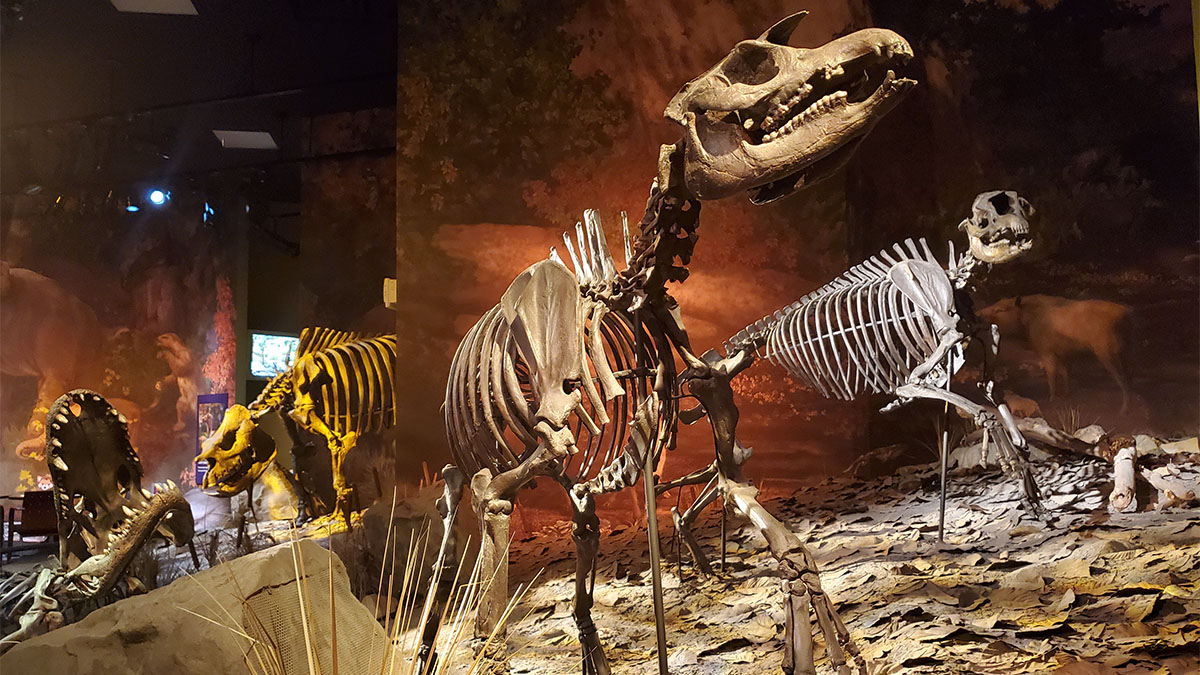

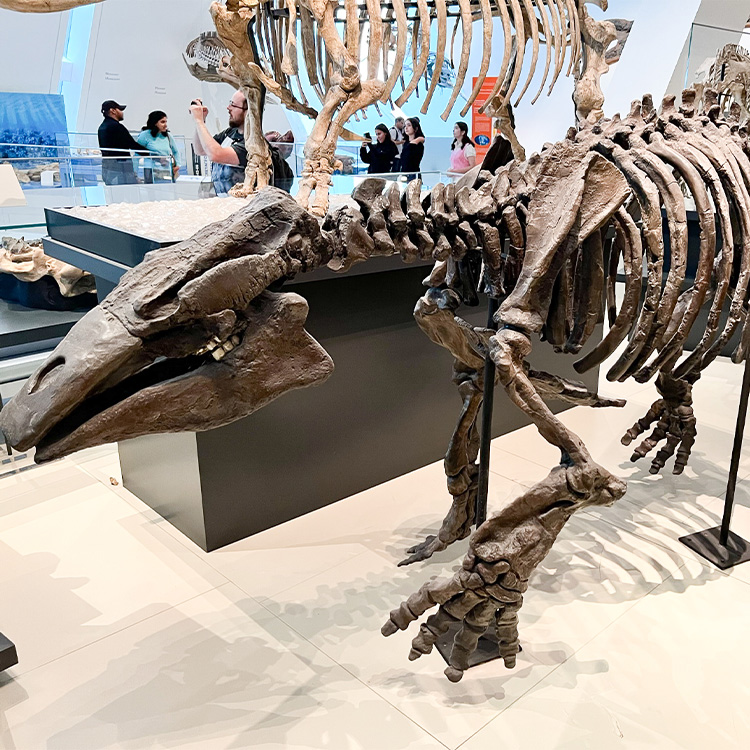
In 2000, a Tennessee road project near Johnson City hit something nobody expected: a nearly 5-million-year-old forest.
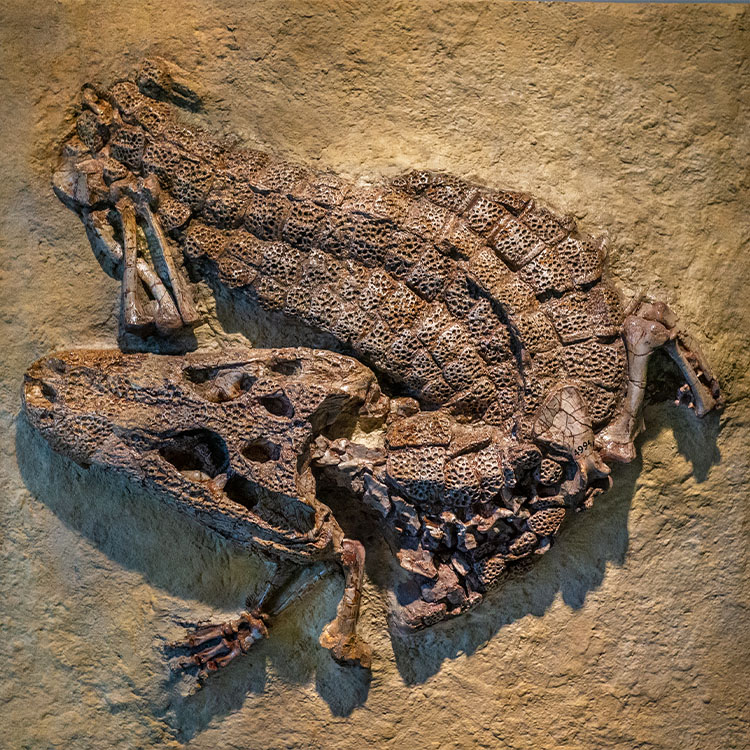
Rhinos lived here. So did alligators. And red pandas.
The road was moved. More than 45,000 fossils later, scientists still aren’t done.
And you can stand on a deck and look straight down into the pits.
The Forest Had Familiar Trees and Unexpected Animals
East Tennessee State University dates the ancient pond and surrounding forest to about 4.5 million to 5 million years ago. More than 45,000 fossils have been cataloged. The museum opened in 2007, and ETSU operates the site.
The animals get all the attention. But there’s another detail in ETSU’s account of the discoveries: oak, hickory and pine were part of that forest, too.
Familiar tree names don’t mean the woods always held familiar animals. A landscape can have recognizable pieces and still belong to a very different world.
If you enjoyed our family visit to Ruby Falls, Gray offers another outing built around what lies beneath Tennessee’s ground. Choose this one for the chance to follow the evidence of an ancient ecosystem through a working research site.
Give Yourself Three Questions to Answer
General admission includes the first-floor Paleontology Hall, with animal replicas, interactive games and a simulated dig pit. Upstairs, windows let you look into the fossil preparation lab and collections room. An outdoor deck overlooks the excavation pits.
Instead of treating each area as another room to finish, use these questions to connect them:
- What am I looking at? Read the labels to distinguish an animal replica from an original fossil. A replica helps you picture the animal; the fossil is part of the evidence used to understand it.
- What happened between the ground and the display? At the preparation windows, look for the tools and materials used to clean, strengthen and reassemble remains. The discovery is one stage in a much longer process.
- What can a small find tell us? Think beyond the largest animal. Fish bones and plant seeds help researchers understand the setting around it.
Those questions work for adults on their own or grandparents visiting with children. Nobody has to memorize a species list. The aim is to leave able to explain how one discovery becomes knowledge about the place you live.
Decide Whether the Tour Adds What You Want
The daily Paleo Tour costs $2 per person in addition to admission. The operator describes a guided visit onto the fossil site, followed by explanations of the preparation lab and collections work. It’s not advertised as a chance for visitors to excavate.
General admission already provides the exhibits, research windows and viewing deck. The extra payment buys guided interpretation and access onto the site.
For a group interested mainly in animal displays and interactive activities, I’d start with general admission. For someone who wants help connecting the pits, preparation work and research, I’d consider the tour. Paying extra makes sense when it adds the part of the experience you came for.
Ask about availability as soon as you arrive. Then explore the hall and upstairs windows around your departure time. If tours are full, you still have a self-guided visit to make.
Choose Your Season Around the Work You Want to See
ETSU describes outdoor fieldwork as running from late spring into early autumn. Lab work continues year-round, although that doesn’t promise a worker will be visible at every visiting hour.
For November, I’d plan around the indoor exhibits and preparation windows. If watching excavation would justify a long drive, confirm that crews will be outside before choosing the date.
A quieter-looking pit doesn’t mean the scientific work has stopped. Once you’ve considered how much must happen after a fossil is lifted from the clay, an indoor visit has a purpose of its own.
That makes Gray an option for readers looking beyond the outdoor ideas in our guide to Tennessee locals’ favorite winter activities. Choose it because you want the museum and research experience, rather than relying on an active dig to provide the whole outing.
Work Out the Cost for Your Actual Group
Published general admission is $11 for ages 4 and older. Children 3 and younger enter free. Here is what that means before any applicable taxes, fees or other purchases:
| Your group | General admission | With a Paleo Tour for everyone |
|---|---|---|
| Two adults | $22 | $26 |
| Two adults and two children ages 4 or older | $44 | $52 |
The family decision is an extra $8 for the guided experience. The bigger expense for someone traveling farther may be the time and cost of reaching Gray.
Hands On! recommends allowing 1½–2 hours for its exhibits and activities. Compare that with your round-trip driving time before making this the sole purpose of a day away.
For a longer Northeast Tennessee visit, Jonesborough is one possibility to research alongside Gray. Our guide to Tennessee’s favorite small towns covers its historic downtown. Check opening hours for the stops you choose; don’t assume two attractions share the same schedule.
If You Live Close Enough to Return, Compare Membership First
A repeat visit could let you see the indoor work now and return during a confirmed excavation period. Before buying several rounds of tickets, compare the Hands On! membership options.
A dual membership costs $80 for two named people. At standard admission, four visits for the same two adults would cost $88. Membership is $8 less by that fourth visit, before counting other benefits.
For two adults and two children ages 4 or older, a dual membership plus two $35 child add-ons totals $150. Four standard-admission visits for that group would total $176, a $26 difference.
These comparisons cover admission only, exclude taxes and fees, and don’t count discounts, tour charges or guest passes. Membership lasts one year and isn’t transferable, so the calculation works best for people who expect the same named visitors to return.
I wouldn’t buy it simply because four visits cost more. I’d buy it if four visits within a year already sound realistic. One planned outing and three imagined returns aren’t a saving.
Before You Leave Home
The address is 1212 Suncrest Drive, Gray, Tennessee. Regular hours are Tuesday–Saturday, 10 a.m.–5 p.m., and Sunday, 1–5 p.m. All times are Eastern. Travelers coming from Nashville or other Central Time communities need to plan for the hour change.
For November 2026, the center is closed on Mondays and Thanksgiving Day, November 26.
Hands On! lists Paleo Tours at 11 a.m., 1 p.m., 3 p.m. and 4 p.m., subject to availability. Confirm your day’s departures, particularly on Sundays. Tour tickets are sold at the front desk on a first-come basis.
Seniors receive $1 off individual admission. Discounts aren’t currently available online; call 423-434-4263 to arrange discounted tickets. Check the operator’s current admission and visitor information before purchasing.
ETSU lists accessible parking, power-assisted entrance doors and elevator access to all public floors. One manual wheelchair is available first come, first served. For the outdoor tour, ask separately about surfaces and the route when you call.