
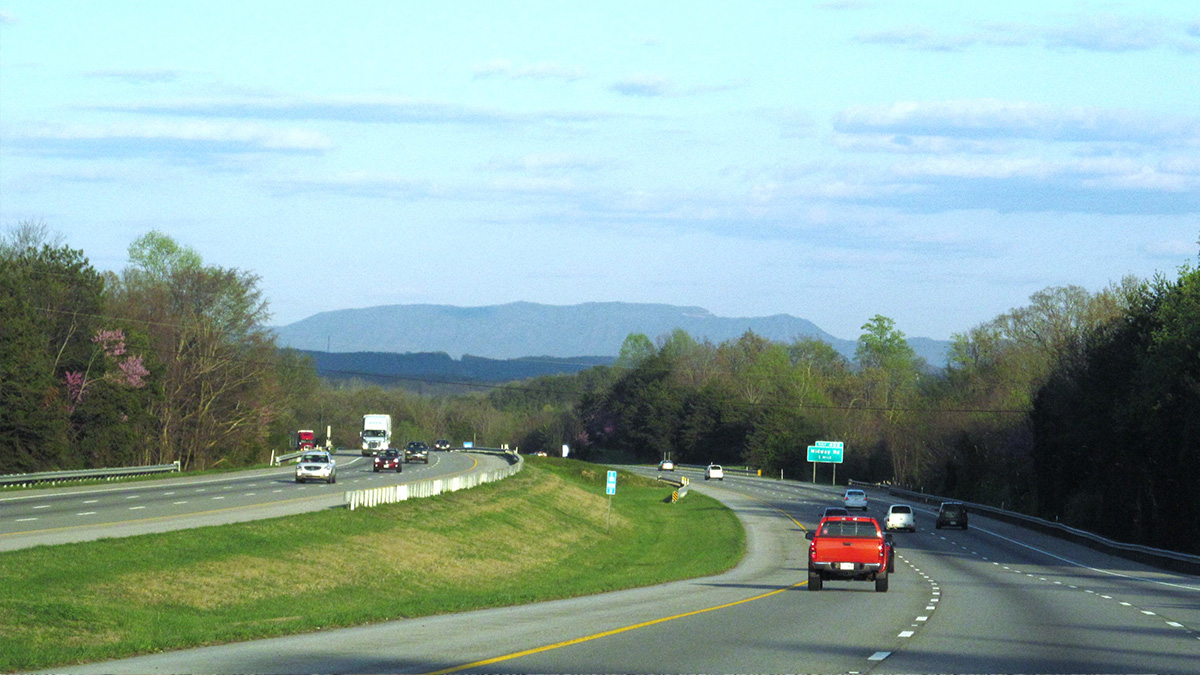

Leave at 8 a.m. on Monday after Thanksgiving, and you’ll be within INRIX’s recommended departure window. Tennessee’s holiday construction pause will already have ended two hours earlier.
You could miss the predicted afternoon traffic peak and still encounter scheduled roadwork.
That’s the detail worth checking before choosing your Thanksgiving departure: a favorable traffic window doesn’t tell you whether your route has construction restrictions, whether your rest stop is open or whether you’ll reach dinner on time.
AAA’s November 16 forecast projects more than 1.92 million Tennesseans will travel at least 50 miles from home during November 24–30, 2026. More than 1.84 million will travel by car. That automobile figure includes passengers, while shorter holiday drives fall outside the count.
Here’s how to build a trip around the forecast without asking it to predict more than it can.

Choose a Departure You Can Actually Use
INRIX’s recommendations, published by AAA, favor morning departures on most days surrounding Thanksgiving.
| Travel date | Better departure window | Busiest window |
|---|---|---|
| Tuesday, November 24 | Before 1 p.m. | 2–8 p.m. |
| Wednesday, November 25 | Before noon | Noon–7 p.m. |
| Thursday, November 26 | No specific window listed | Minimal traffic expected |
| Friday, November 27 | Before noon | 1–7 p.m. |
| Saturday, November 28 | Before 11 a.m. | Noon–9 p.m. |
| Sunday, November 29 | Before 11 a.m. | Noon–8 p.m. |
| Monday, November 30 | Before 1 p.m. | 2–7 p.m. |
Times are local to each metro area. These are broad forecasts, not predictions for individual Tennessee interchanges.t predictions for individual Tennessee interchanges. newsroom.acg.aaa.com
Compare two departure times your household could comfortably manage. Include loading the car, picking up relatives and any stops you already know you’ll need.
An earlier departure also deserves a visibility check. November is historically Tennessee’s peak month for deer-related crashes. THP recorded 8,036 deer-related crashes in 2024, including 465 injury crashes. Its guidance emphasizes dawn, dusk and rural roads.
Earlier sunsets can put the familiar drive home in darkness, with roadside visibility limited to what your headlights reveal. Leaving before daylight changes the outbound drive, too. Our guide to Tennessee deer collisions and when risk peaks breaks down the county patterns.
Choose a departure that leaves you rested and gives you time to respond to conditions.
Work Backward From Dinner, Including the Time Change
A navigation estimate is a useful starting point. Add the parts of the trip your family will actually take.
Suppose you’re traveling from Nashville to Knoxville for a meal at 1 p.m. Eastern. For illustration, assume your app estimates three hours of driving.
| Part of the hypothetical trip | Time allowance |
|---|---|
| Driving estimate | 3 hours |
| Planned rest stop | 30 minutes |
| Extra allowance for an unexpected delay | 30 minutes |
| Total planning allowance | 4 hours |
Nashville uses Central Time. Knoxville uses Eastern Time, one hour ahead.
Leaving Nashville at 8 a.m. Central and allowing four elapsed hours puts your planned arrival at 1 p.m. Eastern. That leaves no additional time before the meal.
For a 12:30 p.m. Eastern arrival, you’d need to leave at 7:30 a.m. Central, using those same assumptions.
The driving estimate and delay allowance here are hypothetical. Check your own route; a 30-minute cushion won’t cover every disruption. Don’t add the time-zone adjustment again if your navigation app already displays arrival in the destination’s local time.
The return arithmetic runs the other way. Leaving Knoxville at 9 a.m. Eastern and traveling for four hours puts you in Nashville at noon Central.
This is why “leave before noon” can’t finish the planning for you. The destination’s clock, your stops and your arrival deadline all affect the departure you need.
Monday Has Two Different Schedules
TDOT’s November 4 construction bulletin says lane-closure activity on interstates and state highways will pause from noon Wednesday, November 25, through 6 a.m. Monday, November 30.
Compare that with INRIX’s Monday guidance:
- 6 a.m.: Tennessee’s holiday lane-closure suspension ends.
- Before 1 p.m.: INRIX’s better departure window.
- 2–7 p.m.: INRIX’s predicted busiest window.
A late-morning departure falls after the construction pause ends, even though it fits the traffic recommendation.
Our read: check scheduled work before settling on a Monday return. The suspension ending doesn’t mean every work zone will begin closing lanes at 6 a.m., but the holiday protection from that activity will have ended.
Wednesday presents the reverse planning problem. Waiting until noon for the construction pause would put your departure at the beginning of INRIX’s predicted busiest window.
Check the actual work along your route before changing a workable morning departure.
I-40 Through the Gorge Has a Different Constraint
If you’re taking I-40 between Tennessee and North Carolina, the holiday work schedule tells only part of the story.
The Pigeon River Gorge remains under reconstruction following Hurricane Helene. In its September reconstruction update, NCDOT estimated restoring four lanes by late 2029, with the timetable subject to refinement.
A holiday pause doesn’t rebuild missing roadway or automatically remove long-term lane restrictions. Check the capacity available for your travel date, even if crews aren’t actively working when you pass through.
Review both Tennessee’s SmartWay traffic map and North Carolina’s DriveNC. Check them again before departure because incidents can change the route you planned.
For a Gatlinburg or Pigeon Forge stay, also allow for the drive from the interstate to your lodging. Our Smokies crowd guide explains why national park visitation and traffic in the gateway towns are separate planning questions.
Verify Your Rest Stop Before You Need It
On the SmartWay traffic map, select Feature Menu, then Rest Areas. Click a facility’s icon to see its route, mile marker and open or closed status.
Check the direction of travel as well. A facility across the interstate may require an exit and additional driving.
Save your intended stop and a backup along the same route. If someone in the car needs frequent bathroom breaks, don’t make the backup so distant that reaching it becomes a problem.
Build those stops into your arrival estimate. Skipping a needed break shouldn’t be what makes the schedule work.
Budget for the Whole Drive
AAA reported Tennessee’s statewide gasoline average at $3.44 per gallon on November 15. That’s a dated statewide benchmark, not a promised price at your next exit.
For a hypothetical 400-mile round trip in a vehicle averaging 25 miles per gallon:
400 miles ÷ 25 mpg = 16 gallons
16 gallons × $3.44 = $55.04 in estimated fuel use
Your vehicle, route and pump prices will change that total. Check AAA’s updated gas-price figures and compare stations along your route in a fuel-price app before leaving.
Keep small savings in perspective. A station charging 10 cents less per gallon saves $1.50 on a 15-gallon purchase. Consider whether the extra driving and time are worth it.
Include optional outings in the mileage, too. If you’re adding one of Tennessee’s Christmas light displays, check its operating date and entry time before booking around the family meal.
Five Checks Before Loading the Car
Complete vehicle checks ahead of departure day so there’s time to address a problem. Then use this table for the final route review.
| Checkpoint | What to verify |
|---|---|
| Departure and arrival | Compare realistic departure options; include breaks, a delay allowance and the destination’s time zone. |
| Road restrictions | Check scheduled work and current incidents, including North Carolina restrictions if you’re crossing the gorge. |
| Rest stops | Confirm your main stop’s status, direction of travel and a reachable backup. |
| Fuel and vehicle | Review fuel prices, range, tires, battery and fluids before setting out. |
| Plans if delayed | Decide which optional stop you can drop and who you’ll notify if your arrival changes. |
More from Real Tennessee Life…

Tennessee Returned a Record 169,303 Unclaimed Property Claims. So Why Did the Checks Get Smaller?

Three Liver Transplants in 12 Hours: How Vanderbilt’s Team Did It and Why Nashville’s Transplant Center Is the Nation’s Busiest