
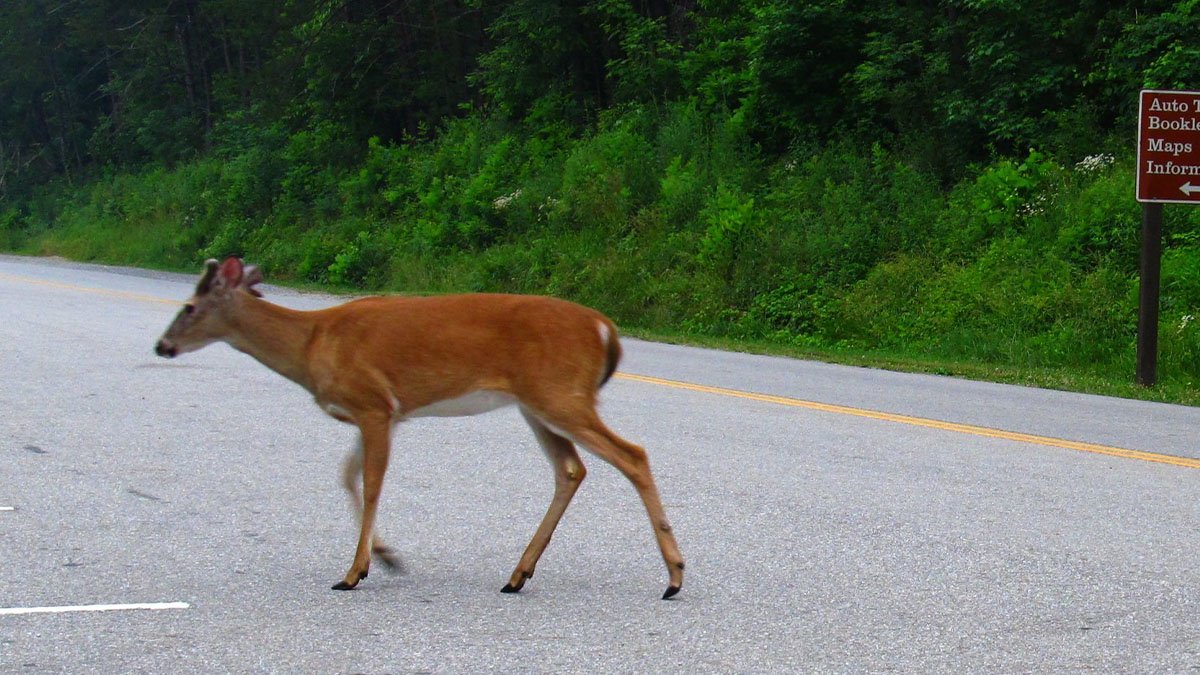

More than one in four deer crashes in Tennessee happens in a single month: November.
It starts this weekend. As the clocks fall back, the drive home from work slides into the dark, right as deer movement peaks.
We went through Tennessee’s official crash map, record by record, to find where those collisions happen most. Montgomery County topped the list, with 409 deer crashes in 2023.
Which Tennessee Counties Recorded the Most Deer Collisions?
The ranking below covers January 1 through December 31, 2023, using mapped deer-crash records from Tennessee’s official GIS dashboard. It includes crashes across all severity categories.
| Rank | County | Mapped deer crashes in 2023 |
|---|---|---|
| 1 | Montgomery | 409 |
| 2 | Sullivan | 392 |
| 3 | Hamilton | 376 |
| 4 | Rutherford | 349 |
| 5 | Wilson | 254 |
| 6 | Sumner | 249 |
| 7 | Williamson | 224 |
| 8 | Shelby | 222 |
| 9 | Robertson | 218 |
| 10 | Washington | 216 |
What Stands Out
Montgomery County led again in 2024, according to the Tennessee Highway Patrol.
Northeast Tennessee has two counties in the top 10: Sullivan and Washington.
Seven of the ten are fast-growing counties around Nashville, Chattanooga or Clarksville.
Robertson County’s second-worst month was June, a reminder that deer crashes aren’t only a fall problem.
#1 Montgomery County
Montgomery County, including Clarksville near the Kentucky border, recorded 409 mapped deer crashes in 2023, the highest county total.
In a separate announcement covering 2024, Tennessee Highway Patrol again named Montgomery the statewide leader, without providing an exact county count.
#2 Sullivan County
Sullivan County recorded 392 mapped deer crashes in 2023, placing second.
The northeastern Tennessee county includes Kingsport and Bristol.
#3 Hamilton County
Hamilton County, including Chattanooga and communities toward Soddy-Daisy, recorded 376 mapped deer crashes in 2023.
That placed it third statewide and second among East Tennessee counties on this list.
#4 Rutherford County
Rutherford County recorded 349 mapped deer crashes in 2023, placing fourth.
The county includes Murfreesboro, Smyrna and La Vergne.
#5 Wilson County
Wilson County, east of Nashville and home to Lebanon and Mount Juliet, recorded 254 mapped deer crashes in 2023, placing fifth.
#6 Sumner County
Sumner County recorded 249 mapped deer crashes in 2023, placing sixth.
The county includes Gallatin, Hendersonville and Portland. THP also named Sumner among Middle Tennessee’s leading counties for deer crashes in 2024.
#7 Williamson County
Williamson County, including Franklin, Brentwood and part of Spring Hill, recorded 224 mapped deer crashes in 2023, placing seventh.
#8 Shelby County
Shelby County recorded 222 mapped deer crashes in 2023, placing eighth.
The county includes Memphis and surrounding municipalities.
#9 Robertson County
Robertson County, along the Kentucky border in Middle Tennessee, recorded 218 mapped deer crashes in 2023.
November was its highest month, but June came second. Its collisions were not confined to the fall.
#10 Washington County
Washington County, including Johnson City and Jonesborough, rounds out the ranking with 216 mapped deer crashes in 2023.
Along with Sullivan, it gives northeastern Tennessee two counties in the top 10.
November Is the Clearest Peak
Tennessee recorded 1,957 deer crashes in November 2023, out of 7,434 for the year. That’s 26.3%, or more than one in four.
October, November and December together accounted for 3,754 crashes—50.5% of the annual total.
For drivers, that peak arrives as familiar trips shift into darkness. The route home from work or the grocery store may be the same, but visibility has changed.
If you’re heading out to explore Tennessee’s parks and natural areas, allow for the possibility of driving home after sunset.
Slow down when deer are nearby, watch both roadsides and leave enough room to respond.
Keep those habits after fall ends, including on drives to winter outings around Tennessee. The state recorded deer crashes in every month of 2023, including 527 in June.
Why Evening and Overnight Driving Matter
Shorter days put more routine driving after sunset. Dawn and dusk deserve attention, but watching for deer remains important throughout a nighttime trip.
Seasonal deer behavior adds another consideration. During the rut, bucks pursue and court does, increasing breeding-related movement.
Breeding timing varies across Tennessee, so there is no single rut week that applies statewide. Hunting-season dates also do not mark the beginning or end of collision risk.
Even on a road you know well, watch for movement along the edges of your headlights.
What to Do When You See a Deer
November deer crashes aren’t bad luck. They’re predictable. The same commute that felt safe in September becomes a different drive after the time change, and the numbers show it every year. If you only change one habit this month, slow down on the first dark drive home.
Seeing a deer beside the road gives you a chance to prepare. Slow down and keep watching both the animal and the surrounding roadside.
Official Tennessee guidance supports a few clear habits:
- Expect more deer. After one crosses, others may follow. Keep watching before resuming speed.
- Brake firmly and maintain your lane if a deer enters the road. Swerving can lead to a more serious collision with another vehicle or a roadside object.
- Use high beams when appropriate. Avoid dazzling other drivers, and keep your headlights working properly.
- Leave room to stop. The driver ahead may see a deer before you do.
- Wear your seat belt and avoid distractions. Give yourself time to notice movement and respond.
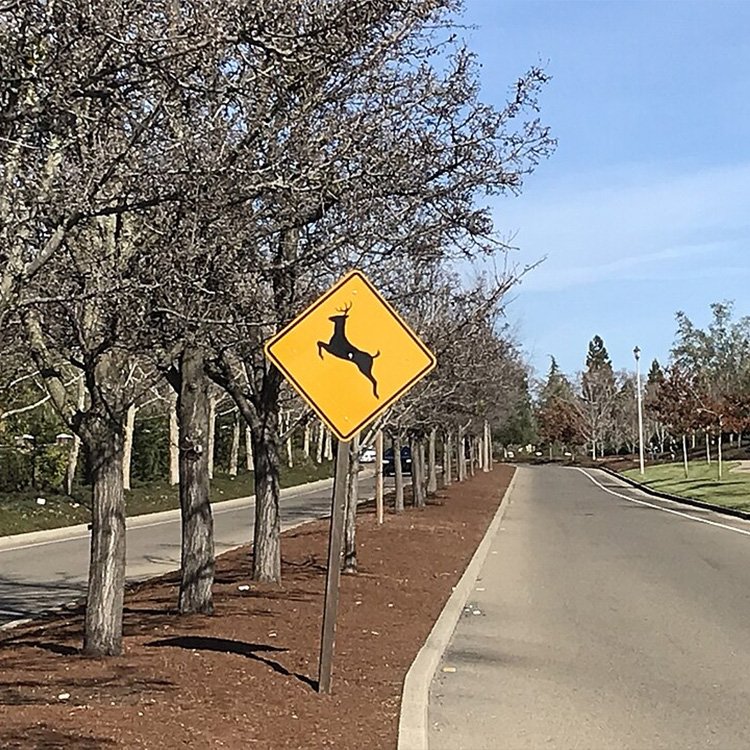
Deer-crossing signs are useful reminders, but deer can appear outside signed areas. Do not rely on deer whistles to prevent a collision.
If a Collision Happens
Focus first on the people in your vehicle and the traffic around you.
- Move away from traffic when safe. If the vehicle is drivable, get to a safer location and turn on the hazard lights.
- Notify law enforcement. Call 911 for injuries or an immediate emergency. For non-emergency reporting or highway assistance, contact the appropriate law-enforcement agency or dial *THP (*847).
- Stay away from the deer. An injured animal can be dangerous. Do not enter traffic to move an animal or debris; tell dispatch if it creates a roadway hazard.
- Document the collision when safe. Photograph the damage, note the location and obtain the crash-report information for your insurer.
Separately from notifying law enforcement, Tennessee requires an Owner Operator Report within 20 days when a crash involves:
- Injury or death.
- Property damage exceeding $1,500.
- Damage to state or local government property exceeding $400.
The report must be submitted to the Tennessee Department of Safety and Homeland Security, regardless of fault. It is required in addition to an investigating officer’s report.
Damage from directly striking a deer is generally handled through optional comprehensive coverage, subject to your policy’s terms and deductible. Check your coverage and contact your insurer promptly after a collision.
How We Built This Ranking
We matched each crash in Tennessee’s official crash map for 2023 to its county. One of 7,434 records had no usable location and wasn’t counted; it wouldn’t change the order. These are reported crashes, not every deer strike, and the totals don’t account for county size, population or miles driven. This is our own count, not an official state ranking.




2 thoughts on “Tennessee Counties With the Most Deer Collisions and When Risk Peaks”