


Starting January 1, 2027, every Tennessee vehicle registration and renewal will carry a new line of all-caps legal text.
Most drivers won’t have to do a thing about it.
But if you buy a car, move to Tennessee, or need a new license plate next year, you’ll have to prove you’re a U.S. citizen or lawfully in the country before the county clerk can register your vehicle. The good news: the driver license already in your wallet probably counts.
And if you drive an electric car, your renewal is going up $74 on the same day, for a completely different reason.
Here’s who’s affected, what to bring, and the second registration change already lined up for July.

The New Rule in Plain English
Under Public Chapter 954, which became law on May 7, 2026, Tennessee won’t process an initial vehicle registration that comes with a new license plate until the applicant shows documentation that they are one of these:
- A U.S. citizen
- A lawful permanent resident of the United States
- A person the federal government has authorized to be in the country for a specific purpose and period of time
You don’t have to be a citizen. Permanent residents and people with certain federally authorized temporary stays qualify, too.
The law started as House Bill 1708 and Senate Bill 1889 and adds a new section to state law, Tennessee Code § 55-4-144. It doesn’t replace the registration process you already know. It adds one more check to transactions county clerks already handle, under rules set by the Tennessee Department of Revenue.

Does It Apply to You? A Quick Check
The law is about the type of transaction, not whether you own a car. Find your situation:
| Your situation in 2027 | Need to show proof? |
|---|---|
| Renewing a registration you already have | No |
| Buying a new vehicle and getting a new plate | Yes |
| Buying a used vehicle and getting a new plate | Yes |
| Moving to Tennessee and registering here for the first time | Yes |
| Buying through a dealership that handles the paperwork | Yes, the dealer submits a copy |
| Moving your current plate to a replacement vehicle | Not fully settled; ask your county clerk |
| Jointly owned or business-owned vehicles | Ask your county clerk |
It isn’t just cars. Pickups, SUVs, motorcycles, and other vehicles in the covered registration process can fall under the rule.
Example: A family in Murfreesboro buys a used SUV in February 2027. If registering it means getting a new Tennessee plate, they’ll need to show qualifying documentation along with the usual title paperwork. Easy, if they know ahead of time. Annoying, if they find out at the counter.
New to Tennessee? You generally have 30 days after establishing residency to register your vehicles here. Plenty of people are doing it, too. Tennessee has grown fast enough that some locals joke the state is already full.

Your Tennessee License Probably Already Counts
You don’t need to dig out a birth certificate. The law itself names five Tennessee IDs as proof:
- A REAL ID-compliant license
- A standard Tennessee driver license
- A Tennessee temporary driver license
- A Tennessee photo ID license
- A Tennessee temporary photo ID license
You don’t need a REAL ID for this. A regular Tennessee driver license works, so there’s no reason to upgrade your license just to register a car.
Your phone may work, too. The law allows documents in paper or electronic form, including images shown on a cellphone. The document itself still has to be on the approved list.
No Tennessee ID yet? The Department of Revenue has published its full list of acceptable documents. For citizens, it includes a valid U.S. passport, a Certificate of Citizenship, a Certificate of Naturalization, or a U.S. Citizen ID card, and it lists separate documents for permanent residents and people with temporary legal presence. That’s especially useful for new residents who haven’t switched over to a Tennessee license yet.
You shouldn’t have to prove it twice. If the Department of Revenue or your county clerk has already recorded your documentation under the new law, that can count for a later qualifying registration, unless another law requires otherwise.

The All-Caps Notice on Every Renewal (and Why It Doesn’t Mean You)
Here’s the part most likely to confuse people. Starting January 1, the law requires every registration and every renewal to include this notice:
THE OWNER AND/OR OPERATOR OF THIS VEHICLE IS REQUIRED TO BE A UNITED STATES CITIZEN, LAWFUL PERMANENT RESIDENT, OR TEMPORARY LAWFUL RESIDENT PURSUANT TO TENNESSEE CODE ANNOTATED, § 55-4-144.
So you may see that text on your renewal even though you don’t have to submit anything new. Getting the notice isn’t the same as being asked to prove your status.
If you’re simply renewing:
- Your current, valid registration runs until its normal expiration date.
- You don’t need new plates or a new registration card because of this law.
- You can still renew the usual ways, online, by mail, at a self-service kiosk, or at the county clerk, depending on your county.
- There’s no reason to rush a renewal before January 1, either. Ordinary renewals aren’t covered by the new check.
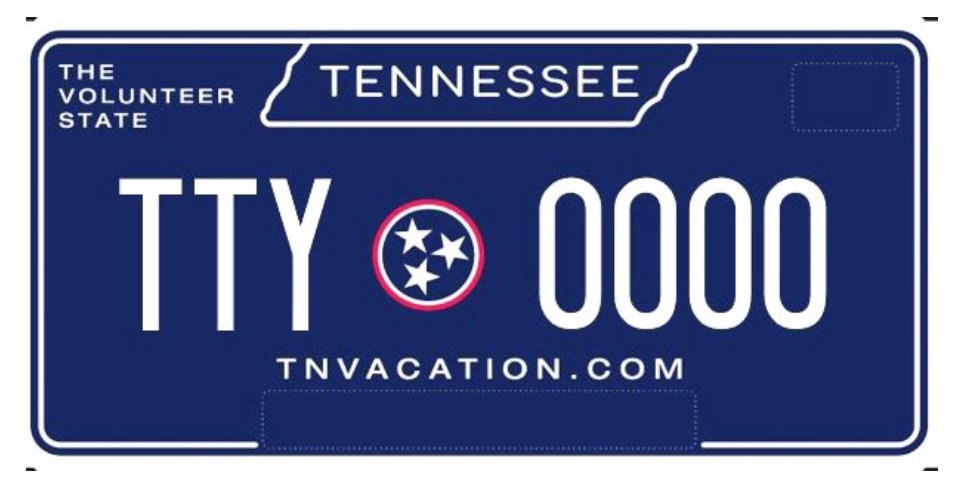
Your Fee Isn’t Changing, Unless You Drive an EV
The new documentation law doesn’t add a fee. Tennessee’s standard plate fees stay at $26.50 for a passenger vehicle and $19.50 for a motorcycle, before county taxes, specialty plates, and other local charges.
But a separate law passed in 2023 kicks in a scheduled increase on the same day for electric vehicle owners:
| Vehicle | Through Dec. 31, 2026 | Starting Jan. 1, 2027 | Starting 2028 |
|---|---|---|---|
| All-electric | $200 extra | $274 extra | $274, adjusted yearly for inflation |
| Hybrid or plug-in hybrid | $100 extra | $100 extra | $100, adjusted yearly for inflation |
Those charges come on top of the standard registration fee. For an all-electric car, that’s $274 plus $26.50, or $300.50 in 2027, before local fees.
When the law passed in 2023, the nonpartisan think tank ThinkTennessee said a $274 fee would be the most expensive in the country.
To be clear, the EV increase has nothing to do with the citizenship requirement. It just happens to start the same day. The Department of Revenue has the full electric and hybrid fee schedule.
The Second Change Already Coming in July
January isn’t the end of it. Other legislation from the 2026 session sets up another change for first-time registrations.
Starting July 1, 2027, anyone registering a vehicle for the first time will also have to show proof of financial responsibility, like auto insurance, in paper or electronic form. The legislation also toughens consequences for uninsured drivers.
So if you’re planning to buy a car next year, the paperwork stack grows in two steps: proof of status in January, then proof of insurance in July.
It’s part of a busy stretch for Tennessee law. Catch up on other new Tennessee laws from 2026 that affect visitors and residents.

Your January 1 Registration Checklist
If you’re only renewing: Nothing new. Renew the way you always do when your date comes up.
If you’re buying a vehicle or registering one for the first time in 2027, bring:
- Your Tennessee driver license or ID, or another document from the state’s approved list
- The usual ownership paperwork, like a properly assigned title and an odometer disclosure when required for a used vehicle
- For new residents, your existing out-of-state registration and other ownership information
- Starting July 1, 2027, proof of insurance
If a dealer is handling it: Ask what they need from you. The dealer has to submit a copy of your documentation with the application.
If your situation is unusual, such as keeping your plate for a new vehicle, a jointly owned vehicle, or a business registration, check with your county clerk or the Department of Revenue’s initial registration page before you go.
If you don’t have the documents: The law doesn’t create a new fine or jail sentence for not having them. But the clerk can’t process the registration until you do, and Tennessee’s existing registration requirements still apply, so sort it out before you drive the vehicle.
For most Tennessee drivers, January 1 will come and go with nothing more than a new line of fine print. For anyone buying or moving, a few minutes of prep now can save a second trip to the clerk’s office.