
The most famous story about how Nashville became Music City starts with Queen Victoria. The longtime director of the Fisk Jubilee Singers later said that version is not true.
What is true is better, and it still starts in North Nashville. In 1871, a student choir left Fisk University to keep the school from closing. In 1873 they sang for the queen of England. They came home with enough money to build Jubilee Hall, the first permanent building on campus, and a portrait of the singers still hangs there.
The documented phrase “Music City USA” comes later, from a WSM radio announcer in 1950. The singers did not need that nickname to put Nashville on a world stage.
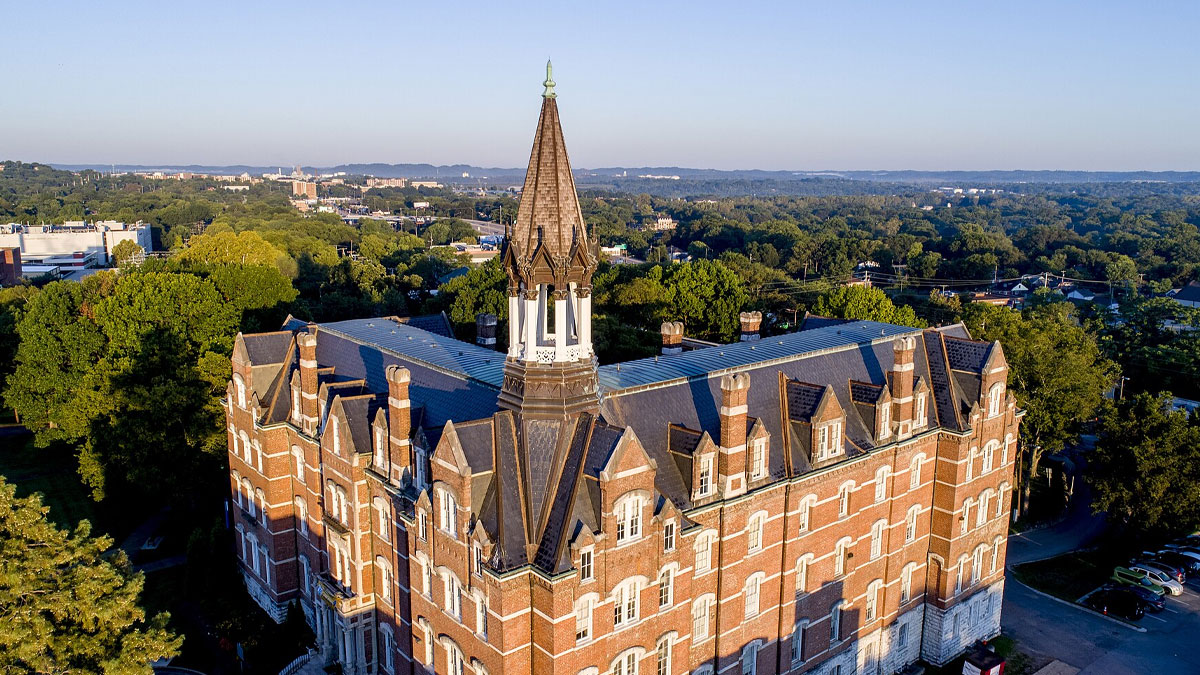
If you want a place to picture the earlier story, go to 17th Avenue North, well off the usual downtown path in a local guide to Nashville. Look up at Jubilee Hall, the six-story Victorian Gothic building that those concerts paid for.
The School That Almost Closed
Fisk opened in Nashville in 1866, in the wooden barracks of a Union army hospital. The school was created to educate Black students after emancipation, including young people who had been enslaved. By 1871 the barracks were leaking, crowded, and broke. Closure was a real possibility.
George L. White, the university treasurer and music teacher, had been listening to his students sing since the late 1860s. He wanted to take a small troupe on the road to raise money. The American Missionary Association, which sponsored the school, opposed the idea. Local trustees finally let the students go.
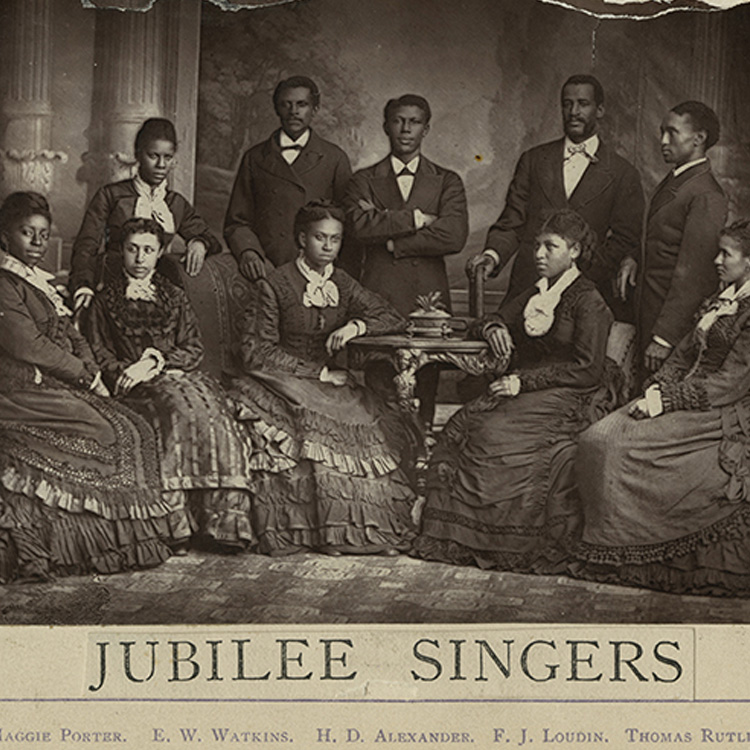
Nine of them left campus on October 6, 1871. Among them were Ella Sheppard, who also played piano, Maggie Porter, Minnie Tate, Jennie Jackson, Isaac Dickerson, Benjamin Holmes, and Thomas Rutling. Fisk still marks that date as Jubilee Day.
The early concerts were hard. The official history of the Fisk Jubilee Singers says some audiences met them with surprise, curiosity, and hostility, in part because the young Black singers did not perform in the minstrel style white listeners expected. One early concert in Cincinnati brought in $50, which they donated to victims of the 1871 Chicago fire.
The music that changed the tour was already theirs. After encores of spirituals drew a stronger response than the more formal sacred songs, those “slave songs,” as they were often called then, moved to the center of the program. White named the group the Jubilee Singers, from the biblical year of jubilee. By 1872 they had sung at the World Peace Festival in Boston and, at President Ulysses S. Grant’s invitation, at the White House. The Tennessee Encyclopedia says the 1872 tour paid many of the school’s debts and helped buy a new campus in North Nashville.
What Queen Victoria Actually Did
In 1873 the group, now larger, sailed for England. Their first concert there was on May 6. The British tour reached the highest audiences in the country, including Queen Victoria and Prime Minister William Gladstone.
That royal performance is well documented. So is the painting that came out of the visit. Fisk’s official history says Queen Victoria commissioned a floor-to-ceiling portrait of the singers during the 1873 tour as a gift to the school. The UK National Archives describes a large portrait by court painter Edmund Havell, presented by the queen. The painting hangs today in Jubilee Hall’s first-floor Appleton Room.
The troupe returned to Nashville in May 1874 with news that they had raised nearly $50,000 for the school’s first permanent building. Architect Steven D. Hatch of New York designed the six-story hall. Construction had started in 1873. Jubilee Hall was dedicated on January 1, 1876, and named for the singers who paid for it. In the mid-1970s the National Park Service designated it a National Historic Landmark.
The Story That Is Not in the Record
The story many people still tell is that Queen Victoria, after hearing the singers, said they must have come from a “music city,” and that Nashville’s nickname begins there.
It is a good story. It has been repeated for years. It has not been documented as her words.
In 2015, Dr. Paul Kwami, then the musical director of the Fisk Jubilee Singers, told FOX 17 how the tradition is usually told: that the queen was so impressed she said, “you people must come from a music city.” He added, “I loved to use that story but later on I found out that wasn’t the truth.” He pointed instead to radio as the source of the name.
That does not shrink what the singers did. They took spirituals from a struggling school in Nashville and performed them for the most famous woman in the world. They turned those concerts into a building that is still in use on the same campus. The legend is about a nickname. The record is about a school that would have gone dark without them.
The Announcer Who Said “Music City USA”
The strongest official account of the nickname comes from a later Nashville institution, WSM.
The station first went on the air on October 5, 1925. Within two months it was broadcasting the Barn Dance that became the Grand Ole Opry. In 2000, the Tennessee General Assembly, in Senate Joint Resolution 791, stated that WSM announcer David Cobb “was the first person who dubbed Nashville as ‘Music City USA’ during an ad-libbed comment on the ‘Red Foley Show’ in 1950.”
That is a documented radio coinage, not a royal quotation. It also came after decades in which Nashville had already become a place where people came to hear and make music, from Fisk’s spirituals to the Opry stage. If you’re tracing that later music business in town, the Musicians Hall of Fame is one place locals send visitors to look past a single famous name and toward the players behind the sessions.
The useful way to hold both stories is to keep them in their lanes. The Jubilee Singers gave Nashville an international musical reputation in the 1870s. A WSM announcer gave the city a slogan in 1950. Queen Victoria heard the singers. She was not, as far as the record shows, the person who named the town.
How to See Jubilee Hall Today
Jubilee Hall still stands at Fisk University, 1000 17th Avenue North, in North Nashville. It is a women’s residence hall, and the portrait of the singers hangs in the Appleton Room on the first floor. Because it is a dormitory, you should not assume you can walk in and see the painting unannounced. Fisk’s admissions office handles campus visits, and the university can tell you what is open the day you go.
There is a state historical marker at the building. October 6 is still Jubilee Day. The Fisk Jubilee Singers still perform, more than 150 years after the first troupe left those barracks.
| Stop | Location | What to know |
|---|---|---|
| Jubilee Hall | Fisk University, 1000 17th Ave. N., Nashville | First permanent campus building, dedicated Jan. 1, 1876; National Historic Landmark; portrait in the Appleton Room |
| Campus visit | Fisk Admissions | Check with the university before you go. The hall is a residence, so interior access is not automatic |
| Jubilee Day | Fisk campus, each Oct. 6 | Marks the day the first troupe left, in 1871 |
If you’re already making a list of Nashville detours, put Fisk on it. The nickname came later. The building, and the portrait inside it, came from the concerts that saved the school.