
One of Tennessee’s castle-like buildings houses city offices. Another was built as a prison, with walls made from stone quarried by prisoners. In the Smokies, a former logging and resort settlement has preserved vacation cottages beside an active campground.
These ten sites range from a tunnel built to redirect river water to an Indigenous enclosure long mistaken for a fort. Some suit a short stop. Others need a tour reservation or a longer walk.
1. Castle Heights — Lebanon
Lebanon’s city offices sit behind battlements and narrow turrets. The building began as a school.
Built in 1902 for Castle Heights, the Main Administration Building combined classrooms, dormitories, and dining space. Brick walls, a sandstone foundation, and Gothic arches gave the school its castle-like appearance.
Today, it houses municipal offices and the Lebanon History Museum. Start outside for the architecture, then visit the exhibits about Lebanon’s people and development.
Expect a local-history museum rather than furnished school dormitories. Municipal offices aren’t open for casual exploring.
The museum opens Monday–Friday, 8 a.m.–4 p.m., except federal holidays. Use the ramp entrance and sign in beside the security station. The museum doors are kept locked, so a closed door doesn’t necessarily mean it’s closed for the day.
Allow about an hour for the exterior and museum.
2. Elkmont Historic District — Near Gatlinburg
Elkmont’s surviving cottages tell the vacationers’ story. Much of the logging town that brought workers here lies beneath today’s campground.
The Little River Lumber Company established the town in 1908. Its railroad carried timber, but it also brought visitors into the mountains. Resort communities developed alongside the working settlement.
Logging ended and the rails were removed in 1925. Private vacation use continued much longer, eventually ending through national-park acquisition and expiring leases.
That layered history makes “ghost town” only part of the description. Elkmont has an active campground, preserved cottages, and scattered building remains.
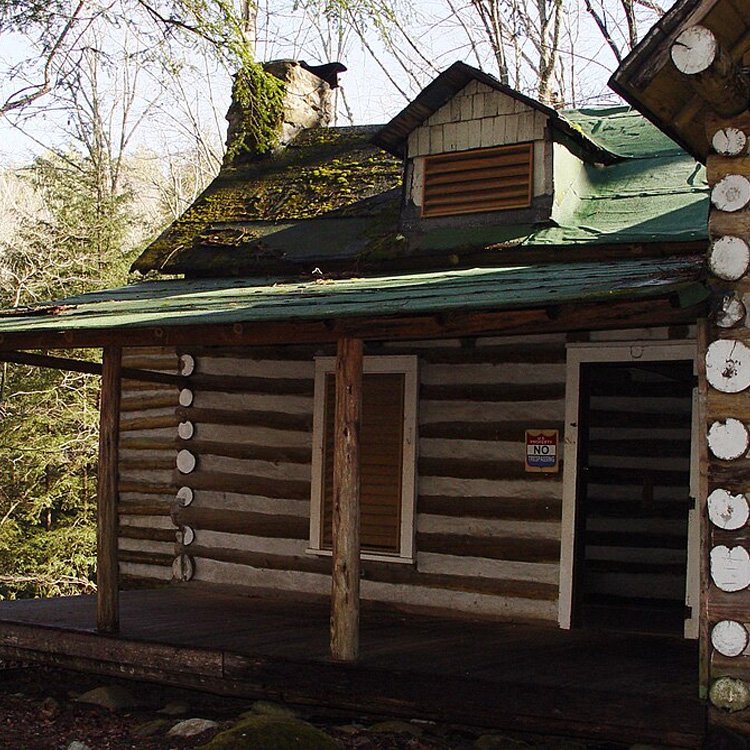
For a shorter outing, begin in Daisy Town. The National Park Service is preserving eighteen cabins associated with the Appalachian Club. Some interiors are open to visitors, although individual openings vary.
Allow about an hour for the cottage cluster. Add time for walks past the stone walls, chimneys, and foundations elsewhere. Stay outside closed structures and leave historic objects in place.
If your dates are flexible, our guide to Smokies crowd levels by month can help you weigh seasonal crowds against access.
A Smokies parking tag is normally required when you park for more than fifteen minutes.
3. Historic Brushy Mountain State Penitentiary — Petros
Prisoners quarried the stone used to build Brushy Mountain’s surviving walls.
The prison opened in 1896; the castle-like stone complex dates to the 1930s. Its battlements make a striking first impression, but the cells and labor history deserve as much attention as the exterior.
Brushy emerged as Tennessee moved away from leasing prisoners to private industry. State control did not end coerced work. Prisoners continued laboring in state coal operations, as well as supplying stone for the prison itself.
Tours take visitors through portions of the prison and grounds, with interpretation drawing on former inmates’ and employees’ experiences. Allow about two hours for an unhurried visit.
Check Brushy Mountain’s seasonal hours and current tour arrangements before driving to Petros. Brushy Mountain uses Eastern Time. Regular history tours close for winter.
Narrow corridors and stairwells also make it important to ask about mobility access before booking. This outing best suits adults and older teenagers interested in prison and labor history.
4. Montgomery Bell Tunnel — Near Kingston Springs
This tunnel was built to send river water through a ridge.
At the Narrows of the Harpeth, the river makes a long bend around a narrow strip of land. Cutting through that ridge created a shortcut—and waterpower for an iron forge.
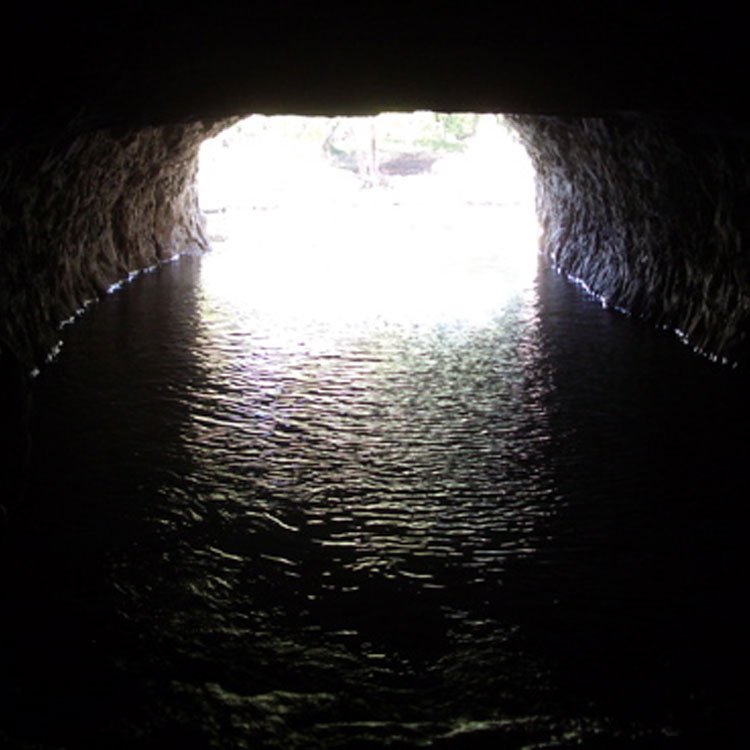
Enslaved African Americans excavated the roughly 290-foot tunnel under Montgomery Bell’s direction. Built in the late 1810s, it supplied a forge that processed pig iron into wrought iron.
The forge buildings are gone. Water still emerges from the tunnel outlet.
The Tunnel Trail is roughly half a mile round trip, but roots, steps, narrow sections, and short steep grades require more attention than the distance suggests. The bluff overlook is a separate climb.
View the outlet from outside. Swimming and climbing at the tunnel pool are prohibited, and visitors cannot use the tunnel as a passage through the ridge.
For navigation, select the Narrows of the Harpeth unit of Harpeth River State Park, rather than Montgomery Bell State Park.
5. Historic Rugby — Rugby
Rugby offered younger sons of British families a chance to build a future beyond their limited inheritance prospects.
British author Thomas Hughes helped establish the agricultural colony on the Cumberland Plateau in 1880. Farming and community life were meant to provide opportunities those sons might struggle to find at home.
Typhoid, fires, and other setbacks undermined the enterprise. Most original colonists had left by 1900, but residents remained. Rugby continued as a living village.
Its ambitions survive in buildings you can enter on a guided historic tour: the Thomas Hughes Free Public Library, Kingstone Lisle, Christ Church Episcopal, and schoolhouse exhibits.
The library dates to 1882.
Interior tours run seasonally on selected days, and Historic Rugby lists its schedule in Eastern Time. Choose your date around the schedule, and allow about two to three hours for the introductory film, tour, and a short village walk.
Some buildings are homes or lodging. Follow visitor guidance about where you can enter.
6. Dunlap Coke Ovens — Dunlap
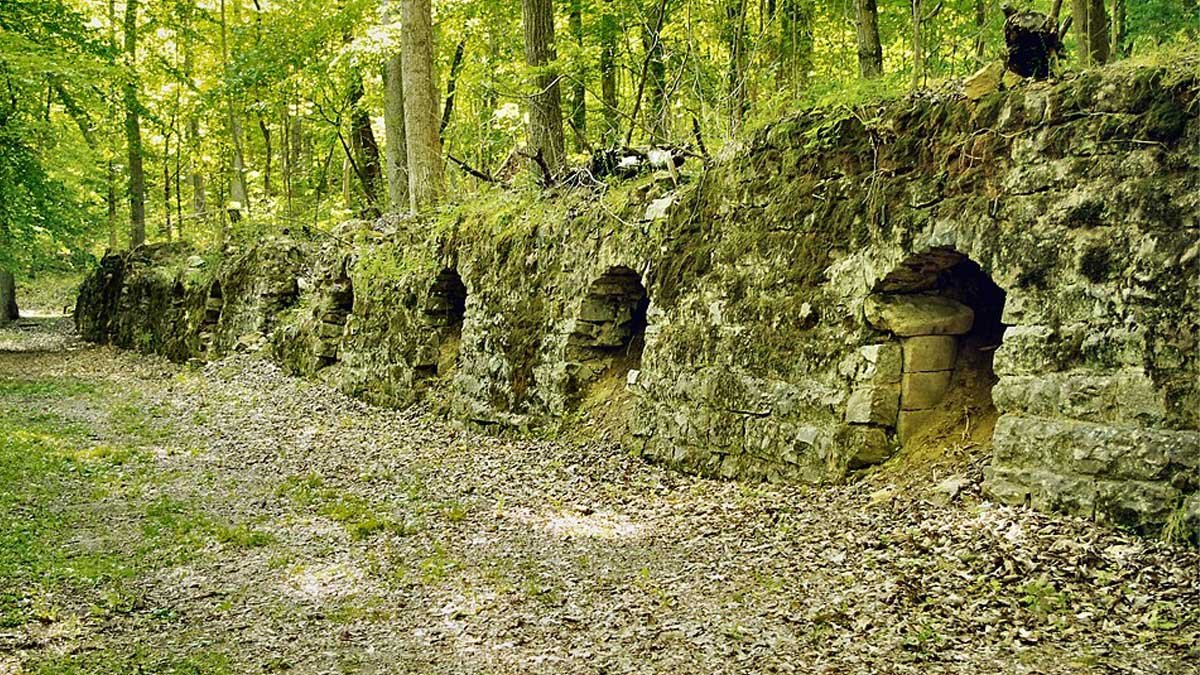
The beehive-shaped openings scattered through these woods once converted coal into fuel for iron and steel production.
Mining began on nearby Fredonia Mountain in 1899. The operation eventually built 268 coke ovens before closing in 1927. Many survive as partial ruins.
The Dunlap Coke Ovens grounds are free to explore from sunrise to sunset. Allow about an hour for a first look. Wear shoes suitable for natural ground and leave the masonry undisturbed.
If you’re making a special trip, check the volunteer-run museum’s seasonal schedule. Photographs and mining artifacts connect the quiet ruins with the people who worked here.
The museum occupies a reconstructed company store on the original store’s footprint. Visit on an opening day if you want both the industrial remains and the exhibits explaining the community around them.
7. Old Stone Fort — Manchester
Old Stone Fort was an Indigenous ceremonial enclosure, despite the military name later attached to it.
Its origins fall broadly between about 100 BCE and 500 CE. Earth-and-stone boundaries occupy a plateau between the Duck and Little Duck rivers.
Begin with the museum to understand the enclosure before walking its perimeter. The 1.4-mile Enclosure Trail passes entrance mounds and waterfall views.
Despite its easy rating, the route includes roots, rock steps, stairs, and short steep sections. Stay on designated trails and back from the river bluffs.
For less walking, focus on the museum and paved viewpoints. Some viewpoint walls affect seated sightlines; ask staff which locations will work best.
For more outings that combine historic features with walking trails, our guide to Tennessee parks locals recommend includes Cades Cove, Rock Island, and Point Park.
The park’s bridge is currently closed to both vehicles and pedestrians because of construction. Other areas of the park remain open. Check the official bridge-closure notice and confirm arrival directions and usable connections with park staff before setting out.
8. Dunbar Cave — Clarksville
Sacred Mississippian drawings survive inside a cave later associated with resort entertainment and country music.
The artwork dates approximately to the thirteenth and fourteenth centuries. Later Cherokee inscriptions add another chapter.
The surrounding landscape also carries the history of enslaved workers, a post-emancipation community, and commercial recreation. Roy Acuff purchased the property in 1948.
To see the artwork, reserve a ticketed ranger-led cave tour. Programs ordinarily run from May through September. Age limits and physical demands vary by tour.
Children four and younger cannot enter; some programs have higher minimum ages. Expect darkness, uneven or slippery surfaces, and possible crouching.
Each person needs a handheld flashlight. Phones and headlamps do not meet the requirement. Photography inside the cave is prohibited.
Cave tours aren’t wheelchair accessible. The visitor center offers a virtual-reality interpretation as an alternative, subject to availability.
Outside tour season, plan for exhibits, the entrance landscape, and surface history.
9. Pinson Mounds — Near Jackson
Pinson Mounds was a place for gathering and ceremony, with no clear evidence of a contemporary permanent town.
The Middle Woodland complex was principally used around CE 100–350. Its surviving earthworks include ceremonial and burial places.
Start in the museum, then choose a route through the grounds. Several paved paths offer alternatives to natural-surface trails, including the approximately 0.85-mile Central Mound Trail.
The park also offers an all-terrain wheelchair by reservation, subject to availability. Use designated paths throughout to protect the earthworks.
Allow about two hours for the museum and a central walk.
Sauls Mound rises roughly 72 feet. Stairs lead to a modern summit observation platform, but climbing is optional; the paved routes let you explore the central landscape without taking the stairs.
10. Chucalissa — Memphis
Chucalissa preserves the mounds and plaza of a Mississippian settlement occupied in several phases from roughly CE 1000 into the early sixteenth century.
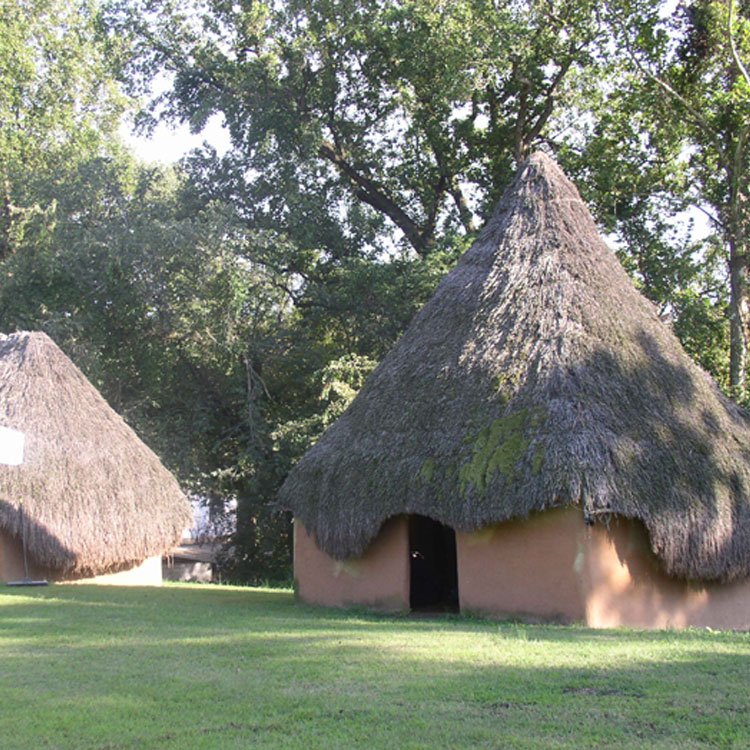
Inside the C.H. Nash Museum, exhibits introduce the site before you head onto the grounds. A furnished replica dwelling helps explain domestic life alongside the surviving earthworks. An optional half-mile nature trail extends the outing.
The landscape’s history continued after its final Indigenous occupants left. Later chapters include slavery, tenant farming, and development of a segregated state park.
Allow about an hour and a half to two hours for the museum and grounds.
The museum opens Tuesday–Saturday, 9 a.m.–4:30 p.m., with last admission at 4 p.m. It closes on university and major holidays.
For arrival, navigate toward T.O. Fuller State Park, then follow the Chucalissa signs. The operator warns that entering the museum’s street address into GPS can send visitors the wrong way.