

Planning a trip to Tennessee seems simple enough on paper. You map out a few honky-tonks on Lower Broadway, schedule an afternoon at Graceland, and plot a scenic drive through the Great Smoky Mountains.
The standard travel guides make it look effortless. But glossy brochures rarely tell you how a state operates on the ground.
I recently asked my audience a straightforward question: What is your number one recommendation for a first-time visitor to Tennessee?
Southern hospitality is famous for a reason, but when you invite honest advice from people who actually live here, you quickly discover that charm comes wrapped in dry wit and healthy skepticism. The comment section lit up almost instantly with playful warnings:
- “Go to Kentucky! Tennessee is full.”
- “Those aren’t snapping turtles. Them is ticks.”
- “The ‘Now Leaving Tennessee’ sign is a great attraction for tourists.”
- “See the sights, take pictures, spend lots of money, then go back where you came from.”
Beneath the running joke that out-of-staters should turn their cars around at the border, locals delivered genuinely indispensable advice. They outlined the unwritten social contracts, highway habits, and regional nuances you need to navigate the Volunteer State like an experienced traveler.
Here is the unfiltered advice locals want you to understand before you cross the state line.
For more context behind the jokes and local pride, read what Tennesseans wish everyone knew about their state.
1. The Social Code: Perfect the Wave, Mind Your Manners, and Order Tea Carefully
Life outside the major metro centers runs at a deliberate pace. People talk to the cashier, hold doors open for strangers, and observe basic courtesies that fast-moving cities often forget.
If that slower pace appeals to you, start with Tennessee locals’ favorite small towns, including Jonesborough, Bell Buckle, and Townsend.
If you want to blend in and get along with everyone you meet, a few subtle adjustments go a long way:
- The steering wheel wave: When driving down two-lane county backroads, passing drivers will often raise two fingers off the top of the steering wheel. This is the universal rural greeting. Do not take your hand off the wheel to wave enthusiastically like an over-eager tourist; simply lift your index and middle fingers from the rim in acknowledgment.
- Mind your manners: Southern politeness is real. A regular rotation of “please,” “thank you,” and “yes, ma’am” or “yes, sir” sets an immediately friendly tone.
- The sweet tea dilemma: In traditional diners, ordering “tea” means you will receive iced tea brewed with generous amounts of sugar. If you ask for “unsweet tea,” be prepared for reality: servers will hand you a glass of cold, unsweetened tea alongside paper sugar packets. Granulated sugar does not dissolve in ice water. If you want sweet tea without the tooth-aching syrup level, ask for “half-and-half”—half sweet, half unsweet.
- The pronunciation rule: If your route takes you toward East Tennessee and the mountains, pay close attention to your vowels. The region is pronounced “Apple-AT-cha,” never “Apple-AY-shuh.” If you need a memory trick, locals often say: if you say it wrong, someone might throw an apple at ‘cha.
- Leave no trace: Whether exploring state parks or scenic pull-offs, pack out everything you bring in. Nothing frustrates residents faster than visitors treating mountain roadsides like trash receptacles.
2. Highway Realities: Freight Corridors, Potholes, and the “Slow Poke” Law
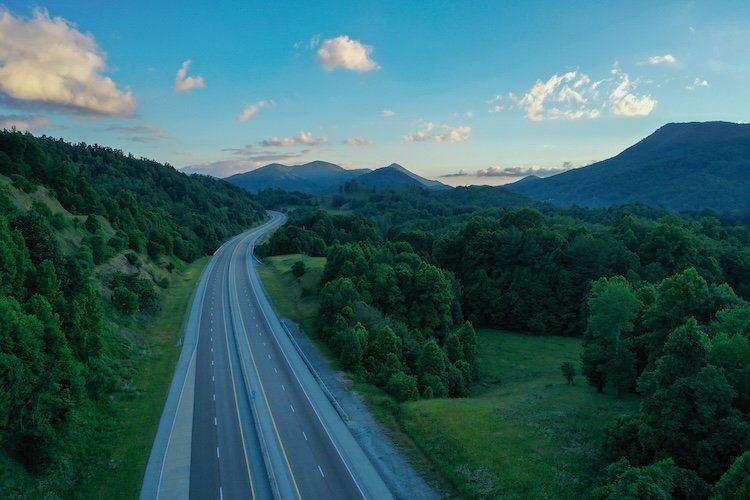
Driving through Tennessee requires patience and situational awareness. Interstate 40 alone stretches over 450 miles across the state, serving as a primary transcontinental freight corridor. You will not just be sharing the interstate with local pickup trucks; you will be flanked by continuous walls of commercial eighteen-wheelers.
To keep traffic moving safely, heed these interstate ground rules:
- Tennessee’s “Slow Poke Law”: The far-left lane is legally designated for passing only. Tennessee state law makes lingering in the left lane while impeding traffic a Class C misdemeanor. If you are driving the speed limit—or below it—stay in the middle or right lanes.
- The “Move Over” culture: Tennessee law strictly requires drivers to move over at least one lane when approaching any stopped vehicle with flashing lights on the shoulder, including state troopers, tow trucks, utility crews, and stranded motorists. If traffic prevents you from moving over, slow down significantly.
- Leave a bumper cushion: A two-second gap between vehicles is a safety margin designed for sudden stops. It is not an invitation to squeeze into the space during heavy traffic.
- Watch for pothole warnings: Winter weather and heavy semi-truck traffic create brutal freeze-thaw cycles that gouge asphalt across major routes. Highway signs warning of rough pavement and deep potholes are literal warnings, not suggestions.

3. The Three Grand Divisions: One State, Three Distinct Cultures
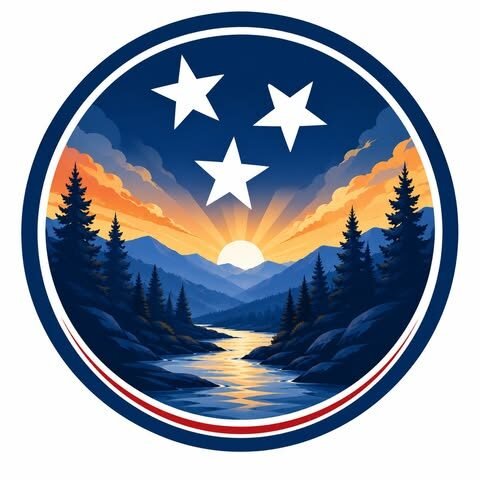
Look at the Tennessee state flag and you will notice three white stars centered inside a blue circle. Those stars represent the state’s Three Grand Divisions: West, Middle, and East Tennessee.
These are not arbitrary geographic zones. They are legally and culturally distinct regions recognized in the state constitution, each with its own terrain, economy, and heritage:
- West Tennessee (Memphis): Bordered by the Mississippi River, this is flat Delta bottomland with historical roots tied to agriculture, rail transit, and music. Memphis operates on its own distinct wavelength—it is the birthplace of rock ‘n’ roll and the heart of classic soul and gritty electric blues. It also boasts a world-famous, slow-smoked dry-rub barbecue tradition.
- Middle Tennessee (Nashville): Characterized by rolling limestone hills and bluegrass pastures, Middle Tennessee is anchored by the state capital. Nashville is a booming corporate and tourism machine driven by the country music industry, historic venues like the Ryman Auditorium, and aggressive development.
- East Tennessee (Knoxville, Chattanooga, and the Smokies): Defined by the Appalachian chain, deep ridges, and an independent mountain heritage, East Tennessee centers heavily around outdoor exploration, rivers, and craft traditions.
Understanding this division helps you plan realistically. You cannot easily conquer all three in a standard weekend trip.
To narrow your itinerary, explore Tennessee locals’ favorite places to visit, with ideas ranging from Memphis music landmarks to Chattanooga’s riverfront.
When visiting urban hubs like Memphis or Nashville, standard urban travel common sense applies: keep personal belongings out of sight inside parked vehicles, stay aware of your surroundings, and stick to well-lit cultural corridors after midnight.

4. The Smoky Mountain Strategy: Beating Gridlock and Avoiding Penalties
The Great Smoky Mountains National Park is the most-visited national park in America, welcoming over twelve million visitors a year. Navigating that popularity requires strategy:
- The parking tag rule: The park famously does not charge an entrance fee, but you cannot park for free. The park enforces a “Park It Forward” policy requiring every vehicle parked for more than fifteen minutes inside park boundaries to display a valid parking tag. Daily tags cost $5, and weekly tags are $15. Buy them online before you go or pick them up at visitor centers; parking without one can result in a federal ticket.
- The Townsend bypass: To bypass the heavy tourist traffic running through Sevierville and Pigeon Forge, route your entrance through Townsend. Known as the “Peaceful Side of the Smokies,” this corridor follows scenic river views and leads straight into the park with fewer delays.
- Cades Cove without the exhaust: Cades Cove is an iconic eleven-mile loop filled with historic cabins, open meadows, and mountain backdrops. During peak hours, the loop often turns into hours of bumper-to-bumper car traffic. Take advantage of vehicle-free mornings: during summer months, the park traditionally closes Cades Cove loop road to motor vehicles every Wednesday so visitors can walk, run, or rent bicycles in peace.
- Wildlife and bear safety: East Tennessee is home to a dense population of wild black bears. If you see a bear, maintain a distance of at least 150 feet. Never approach them for photos, and never leave food inside an unlocked car. Our guide to black bears in the Smoky Mountains explains safe viewing and why securing food matters.
- Watch your step outdoors: Keep to cleared paths when hiking. Ticks, poison ivy, and copperheads are common across wooded and brushy areas throughout the warmer months.
- Offbeat detours: Skip crowded tourist traps and look for quieter historical stops. Drive Gatlinburg’s one-way Roaring Fork Motor Nature Trail, hike the grassy balds at Roan Mountain State Park, or tour the historic stone ruins of Brushy Mountain State Penitentiary near Petros.
5. Dining Like a Local: Meat-and-Threes and the “Real Seal”
Finding authentic food in Tennessee means skipping nationwide chains along the highway exits and pulling up to local establishments.
For meals worth planning a detour around, browse these unique Tennessee dining destinations recommended by locals, from historic boardinghouse lunches to mountaintop restaurants.
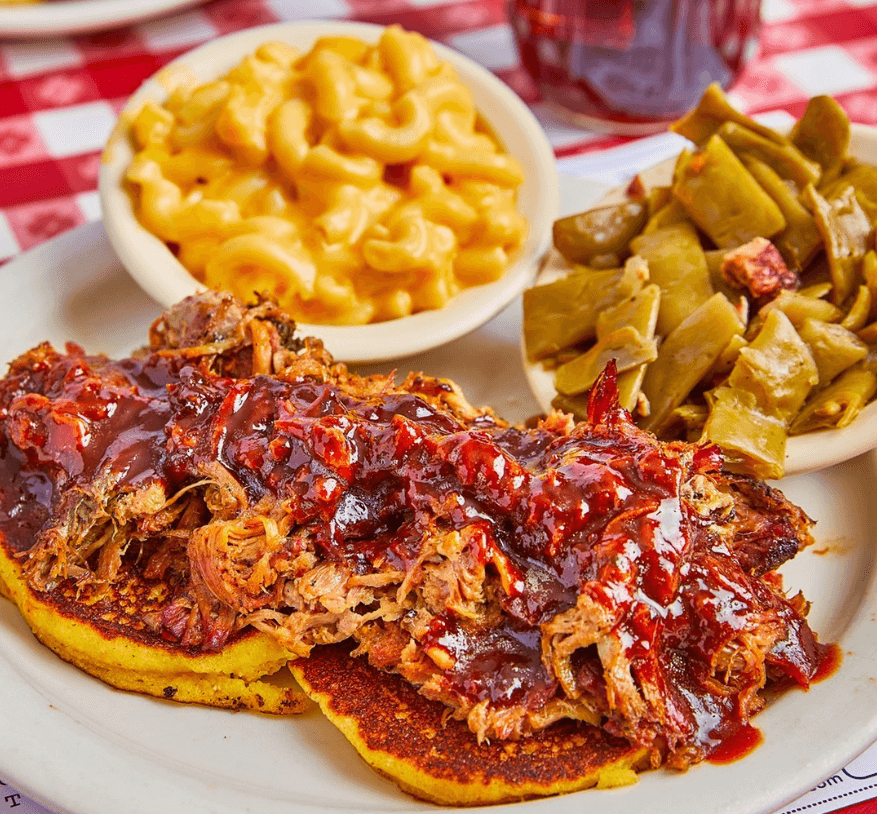
- The “Meat-and-Three”: If you see a roadside establishment advertising a “Meat-and-Three,” pull over. It is a Southern cafeteria tradition: you select one protein (country-style ham, fried catfish, meatloaf, or fried chicken) paired with three side dishes and fresh cornbread or biscuits. In Tennessee diner math, macaroni and cheese unequivocally counts as a vegetable alongside green beans, mashed potatoes, and turnip greens.
- Look for the “Real Seal”: To combat misleading promotional photos and computer-generated travel itineraries, the Tennessee Department of Tourist Development introduced an official “Real Seal” verification mark. This certification guarantees that promotional travel imagery and featured locations are completely real, unfiltered places rather than digital hype.
- Hyper-local stops: Commenters highlighted several specific local stops:
- For thick ribeyes served in a no-frills, historic setting, look for Campbell Station in Middle Tennessee.
- For lake views and solid pizza specials, check out Sunset Restaurant by The Steel Coop in Byrdstown near Dale Hollow Lake.
- If you visit the Pigeon Forge corridor and want classic family dinner entertainment, Dolly Parton’s Stampede delivers a long-running, multi-course spectacle.
Enjoy Your Stay—Then Hit the Road
The prevailing sentiment shared by longtime residents comes down to a simple balance:
- “When in Tennessee, do as the Tennesseans do. Enjoy life, don’t try to change it.”
- “Visit, have fun, but don’t treat your vacation like a house-hunting trip.”
Tennessee’s rapid growth has made locals protective of their open spaces, easygoing pace, and traditions. As long as you respect the land, use your turn signals, tip your servers, and wave back from the steering wheel, you will experience some of the warmest hospitality in the country.
Take in the views, sample the food, enjoy the music—and let the locals keep their quiet backroads when your trip is over.



3 thoughts on “What Tennessee Locals Actually Want First-Time Visitors to Know”