
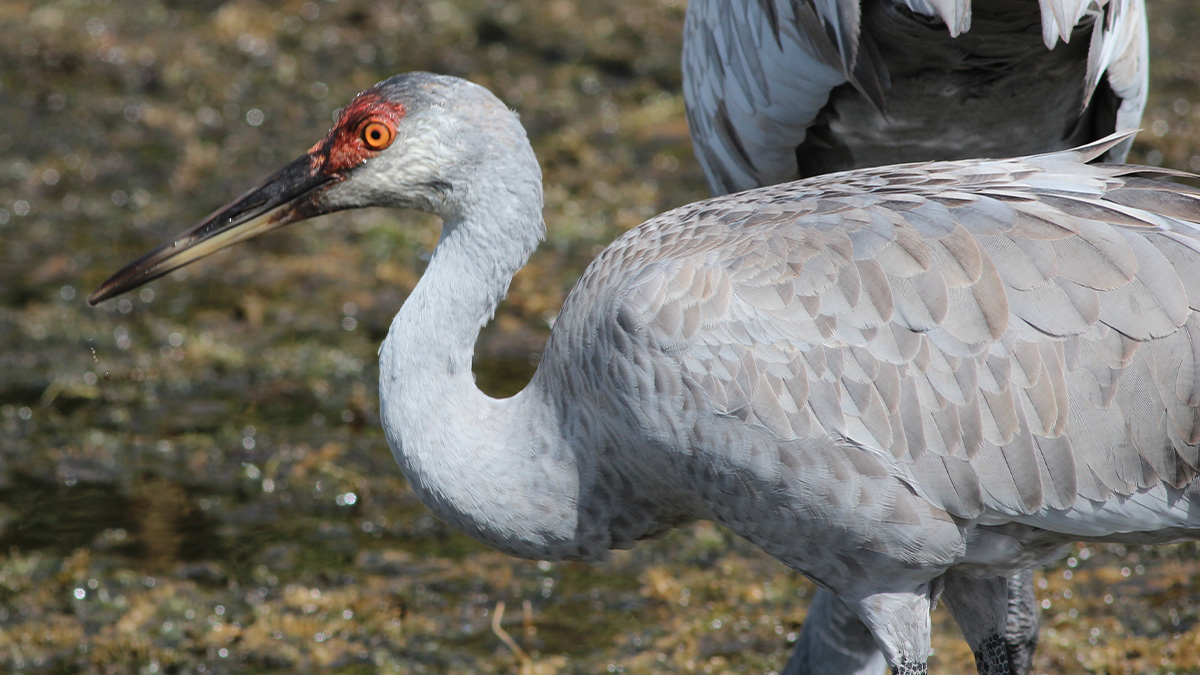

You may hear sandhill cranes before you spot them. Their rolling, rattling calls can draw your attention to a flock overhead—and near Birchwood, some of those birds settle in for the winter.
According to the Tennessee Wildlife Resources Agency, thousands of cranes can gather at Hiwassee.
Hiwassee’s grain fields and shallow wetlands provide food and places to roost. That gives you an opportunity to plan a trip around a winter gathering rather than hope migrating cranes happen to cross your path.
For a first Tennessee crane-viewing trip, the Hiwassee area is the place to start. Two public viewpoints offer different ways to watch.
You don’t need to arrive knowing every bird. Bring binoculars, dress for the weather, and give yourself time to look. If you’re planning more seasonal outings, our guide to winter activities in Tennessee recommended by locals offers more ideas.
When to See Sandhill Cranes in Tennessee
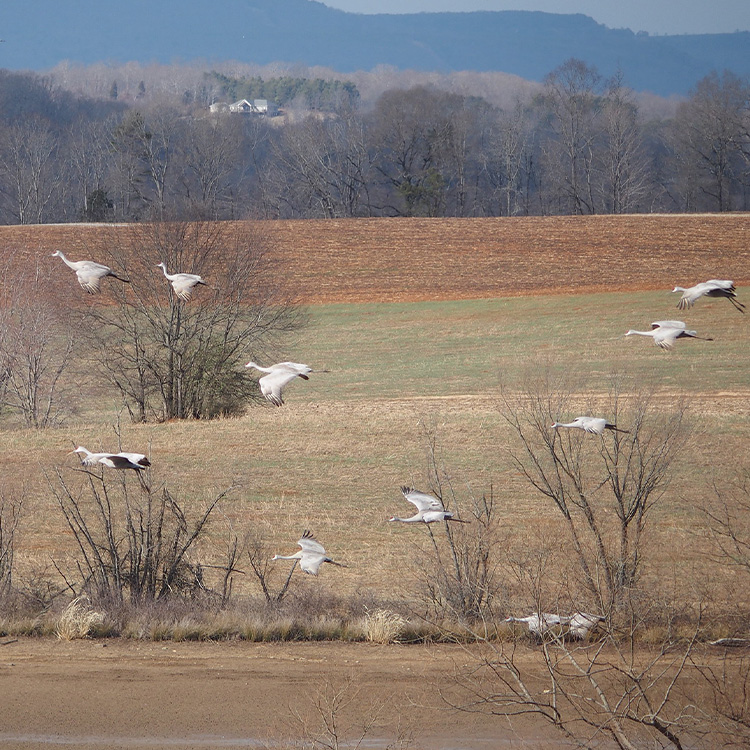
Sandhill cranes typically begin arriving at Hiwassee in very late October, with the main viewing season running from November through February.
January is generally a good month to plan a visit, when crane numbers typically peak.
By around mid-February, northbound migration can begin. You may still find wintering birds, but some cranes will be heading toward their breeding grounds.
Departure from Hiwassee usually occurs by early to mid-March. A March outing may catch passing birds, but it’s a less dependable choice if your goal is to watch a substantial wintering flock.
Weather and habitat help shape that calendar. Cold conditions farther north, available food, and unfrozen roosting areas influence where cranes spend the winter. Local conditions can also shift where they gather.
Hiwassee Refuge: Start at the Observation Platform
At Hiwassee Refuge near Birchwood in Meigs County, you can watch from a designated observation area overlooking the landscape the cranes use.
Depending on where birds are active, you might find flocks on the ground or watch them moving overhead. Scan the fields as well as the sky.
Binoculars make distant birds easier to follow. A spotting scope helps with identification, while photographers should prepare for subjects that may be well beyond close-portrait range.
Managed by the Tennessee Wildlife Resources Agency, the refuge lies around the meeting of the Tennessee and Hiwassee rivers on Chickamauga Lake. Its managed fields and wetlands support the wintering flocks.
The designated wildlife-viewing area remains open during the refuge’s winter closure.
For the 2026–2027 season, the surrounding refuge closes to general use and trespass from November 15, 2026, through February 28, 2027. The viewing-area exception allows an outing during crane season; it does not open adjacent fields, shoreline, or closed roads for exploration.
For navigation, use the observation-platform coordinates, 35.399978, -84.989953. The approach follows Shadden Road and Blythe Ferry Road before turning onto Priddy Lane and following signs. Use the viewing-area directions rather than relying on a general refuge map pin.
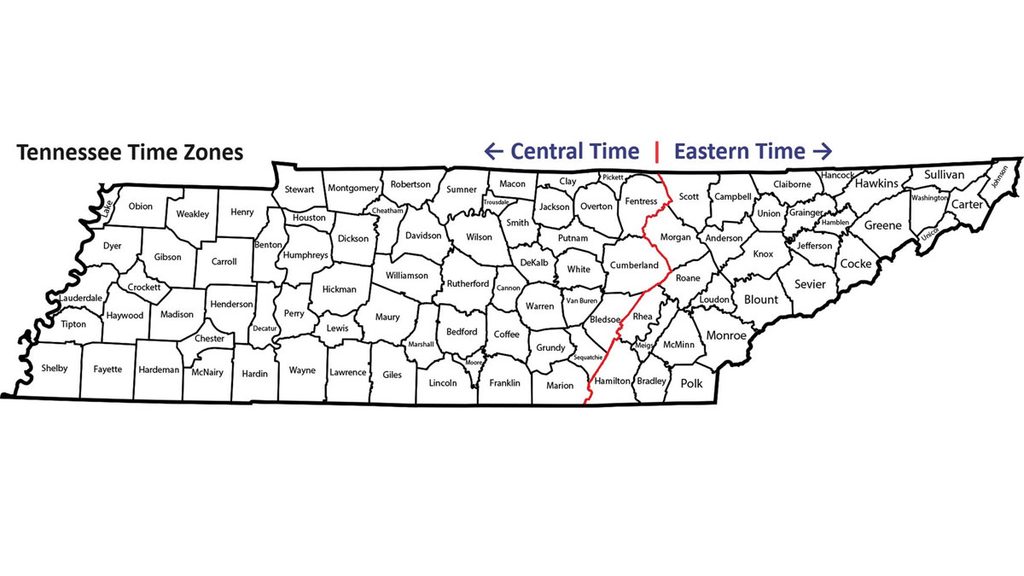
Ordinary viewing is listed as free and available during daylight hours. Birchwood is on Eastern Time, so account for the time change if you’re driving from Nashville or elsewhere in Central Time.
Consider allowing one to two hours for a first visit.
TWRA’s birding-trail page lists no restrooms, although a portable toilet is usually available at the observation platform in winter. Make a restroom stop beforehand.
If you need step-free access or seating, check those arrangements before traveling. TWRA lists the area manager at 423-614-3018; ask about the platform approach, current facilities, and recent viewing conditions.
Cherokee Trail of Tears State Park: A Different View of the Same Wintering Area
For a wider river-and-island perspective, consider the overlook at Cherokee Trail of Tears State Park.
The view looks toward Hiwassee Island and surrounding habitat where winter crane roosting has been documented.
Bring binoculars or a scope for the island view.
Older birding directions may call this property Cherokee Removal Memorial Park. Tennessee dedicated it as Cherokee Trail of Tears State Park in June 2026, so recognizing both names will help you make sense of older directions and festival information.
The address is 6800 Blythe Ferry Lane, Birchwood.
Before visiting, ask park staff which overlook approach is open and suitable for your walking ability. Confirm the correct route if you need step-free access, along with current grounds hours and restroom availability. The park’s number is 423-339-2769.
Ask specifically about closing time if you hope to watch birds returning to roost in the evening.
Consider allowing 45–90 minutes for bird viewing, with additional time for the memorial and interpretive facilities. This is a place of remembrance as well as a wildlife viewpoint. Give its historical purpose room in your visit rather than treating it simply as another place to set up binoculars.
For a relaxed first outing, start at the refuge platform, then add the park overlook if you want a second perspective.
Tennessee Sandhill Crane Festival: January 16–17, 2027
The Tennessee Sandhill Crane Festival is scheduled for January 16–17, 2027, in Birchwood.
If you’re curious about birdwatching but unsure where to begin, the festival offers a useful introduction. Volunteers and spotting scopes are planned at the viewing sites, giving visitors help locating birds and understanding what they’re seeing.
The program also includes raptor presentations, music, vendors, food, and children’s crafts. That variety can suit a family whose members have different levels of interest in watching cranes.
The festival changes the travel arrangements, though. TWRA has announced parking changes, with updated information still forthcoming. Refuge parking during the event is restricted to permitted attendees holding a disability placard.
Check the final parking and shuttle instructions before leaving home. If you need accessible transportation, confirm the vehicle and boarding arrangements directly with organizers.
You can also visit independently on another winter day. The designated refuge viewing area remains available under its ordinary access rules, allowing you to choose your date and set your own pace.
An Optional Alabama Trip: Wheeler National Wildlife Refuge
If indoor shelter and documented accessible viewing would make a crane trip more comfortable, Wheeler National Wildlife Refuge near Decatur, Alabama, is worth considering.
Head to the Wheeler National Wildlife Refuge Visitor Center, 3121 Visitor Center Road, Decatur, Alabama. Use the visitor center rather than the administrative office as your destination.
Wheeler’s typical crane season runs from around mid-November to mid-February, with peak numbers generally in late December and early January.
The Wheeler Wildlife Refuge Association reports that the largest gatherings in the visitor-center fields generally occur around the middle of the day. Birds arrive from night roosts after sunrise and leave later in the afternoon.
Behind the visitor center, a trail of roughly 200 yards leads toward the observation building. Its surface includes hard-packed crushed stone and a small wooden footbridge. USFWS identifies the trail and the building’s first floor as wheelchair accessible.
The observation building offers indoor viewing. Bring your own binoculars for the walk and to use wherever you stop.
USFWS currently lists winter visitor-center hours as 9 a.m.–5 p.m. daily, November–February, with closures on Thanksgiving Day, Christmas Day, and New Year’s Day. The refuge association publishes a different schedule, listing Tuesday–Saturday, so call 256-350-6639 before traveling.
Wheeler is on Central Time. Consider allowing two to three hours for a first visit, including time in the observation building.
What to Bring—and How to Recognize the Cranes
Pack for time spent standing outdoors. Warm layers matter when you’re staying in one place, and binoculars help turn a distant flock into birds you can watch individually.
A spotting scope is useful if you have one. Festival viewing may offer an opportunity to use shared equipment, but don’t assume scopes will be available on an ordinary day.
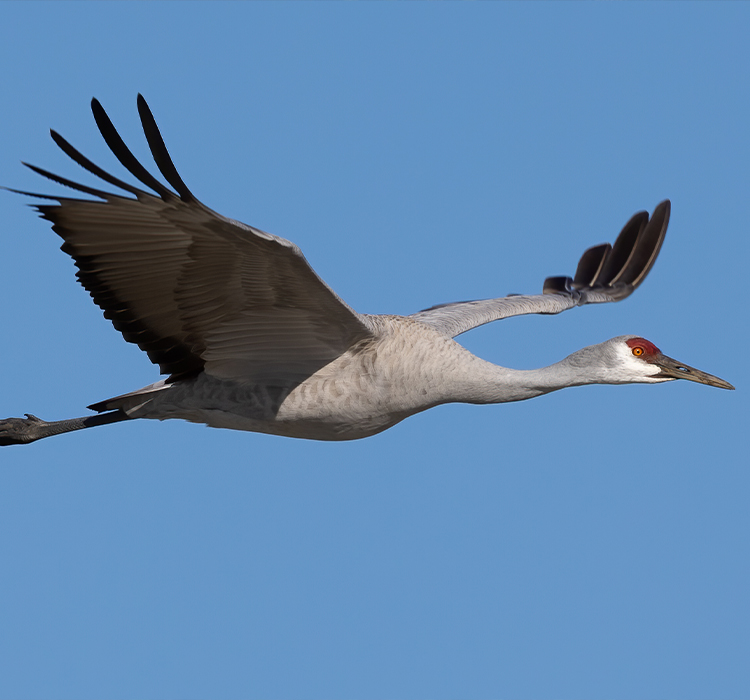
Cornell Lab’s sandhill crane identification guide is useful to review before your trip. Sandhill cranes are generally gray, sometimes with rusty staining. Adults have a red crown and pale cheek, and their rear feathers form a drooping “bustle.” Young birds look different, so avoid relying on crown color alone.
In flight, cranes extend their necks and trail their legs behind them. A great blue heron usually flies with its neck folded back—a useful distinction when a large bird crosses the river.
An occasional whooping crane is possible in these wintering areas. Adults are predominantly white with conspicuous black wingtips in flight. Treat one as a possibility rather than an expected part of the outing.
Stay within designated open areas and respect seasonal closures. Use optics to improve your view, keep roads and farm entrances clear, and never enter private fields without permission.
For another outdoor outing, explore our guide to places to enjoy nature in Tennessee.
Once you’re settled at a viewing spot, pause before reaching for the camera. Listen for those rolling calls, scan the landscape, and give yourself time to follow what the birds are doing.


1 thought on “Sandhill Cranes Gather in Tennessee Each Winter—Here’s Where and When to See Them”