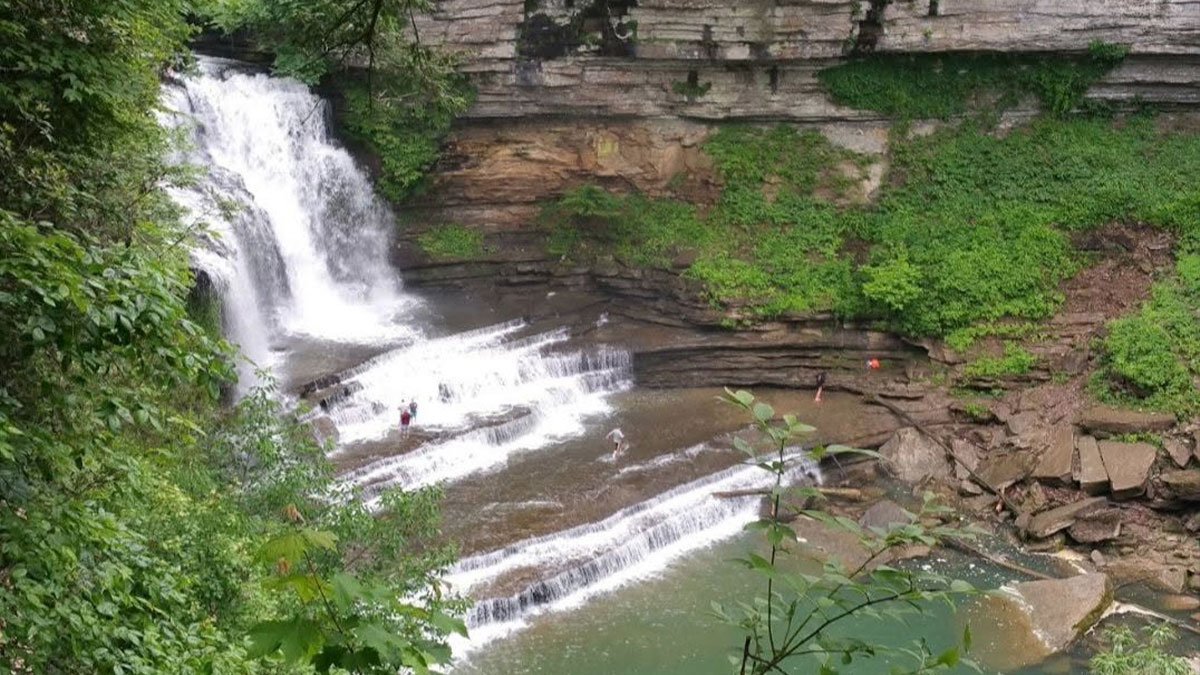

Fall Creek Falls drops 256 feet, and in winter you can see it without hiking a single step of trail.
That’s the secret to Tennessee waterfalls in the cold months: bare trees open up the views, rain fills the falls, and some of the best ones are right off a paved path or a roadside pull-off. Others turn into steep, icy scrambles that aren’t worth the risk.
Here are ten waterfalls worth considering, with the practical details to know before you go.
1. Meigs Falls — Great Smoky Mountains National Park
Want to see a waterfall without a winter hike? Meigs Falls is visible from a pull-off along Little River Road between Gatlinburg and Townsend.
Look for the stone wall near the viewing area, about 13 miles west of Sugarlands Visitor Center or seven miles east of Townsend Wye. Stay at the roadside viewpoint rather than climbing toward the stream.
Little River Road can close during winter weather, so check current park road conditions. A parking tag is required if you park for more than 15 minutes.
Planning a longer trip? Our Smokies crowd guide can help you choose when to visit.
2. Fall Creek Falls — Fall Creek Falls State Park
You might expect a long hike to see a 256-foot waterfall. Not here.
A paved, wheelchair-friendly approach leads to the main overlook at Fall Creek Falls State Park. You can enjoy the view without descending into the gorge.
The Base of Falls Trail is a different experience: steep, strenuous, and potentially icy in winter. For a casual visit, stick with the upper overlook and check park information before leaving.
Thinking of staying overnight? See our guide to Tennessee State Park cabins.
3. Twin Falls — Rock Island State Park
Twin Falls looks unusual because water seems to pour straight out of the rock face. The roughly 80-foot waterfall is connected to the area’s hydroelectric system.
Established overlooks at Rock Island State Park let you see Twin Falls and nearby Great Falls without entering the gorge.
That’s important. Hydroelectric operations can cause sudden water rises, even on clear days. Stay out of restricted areas and check Rock Island’s safety notices.
4. Cataract Falls — Great Smoky Mountains National Park
Not every Smokies waterfall requires miles of hiking. Cataract Falls is about 0.7 mile round trip from Sugarlands Visitor Center, following a woodland trail beside Fighting Creek.
The 40-foot waterfall is often more impressive after rain, but the trail can be muddy. Don’t confuse it with the nearby ADA-accessible Sugarlands Valley Nature Trail: Cataract Falls Trail does not have the same designation.
The park’s accessibility page describes resources including GRIT Freedom Chairs; confirm availability and suitability before visiting. At the falls, stay in the designated viewing area. The National Park Service warns against climbing the sides or top because serious injuries have occurred there.
5. Foster Falls — Fiery Gizzard State Park
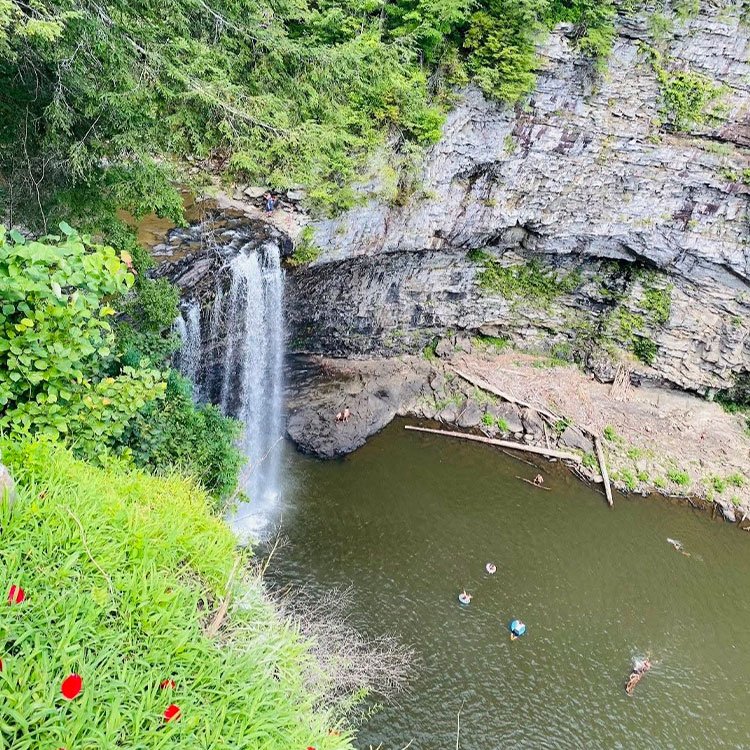
Foster Falls drops 60 feet into a sandstone gorge, but you don’t have to descend to the bottom to enjoy it.
The upper viewing platform is about a quarter-mile from parking. The lower route involves steep stairs, rocks, and a cable bridge—features that can be treacherous when icy.
The short upper approach should not be assumed wheelchair-accessible. Check conditions through Fiery Gizzard State Park before visiting.
6. Ozone Falls — Ozone Falls State Natural Area
Just a few miles from Interstate 40, Ozone Falls plunges about 110 feet into a sandstone amphitheater near Crab Orchard.
The upper viewing area offers a shorter visit. Getting to the lower area involves a rugged, roughly three-quarter-mile trail with steep, rocky terrain.
Winter moisture can make those rocks slippery. You don’t need to descend into the gorge to appreciate the waterfall.
7. Burgess Falls — Burgess Falls State Park
Burgess Falls isn’t just one waterfall. The Falling Water River passes through a series of four, with viewpoints along the way.
The main overlook requires an approximately 1.5-mile round-trip hike over moderately strenuous terrain. There’s no hiking-trail access to the bottom; that requires a separate boat or kayak approach.
Parking has been limited during visitor center construction, so check the official park page before you drive.
8. Machine Falls — Short Springs State Natural Area
Near Tullahoma, Machine Falls spreads across a broad rock face rather than dropping in one narrow stream. The surrounding woods and wet-weather seeps can be especially interesting during moist winter months.
The Machine Falls Loop is about 1.6 miles. Check the official map before you go, and expect uneven, potentially muddy terrain.
If you enjoy the walk as much as the waterfall, it’s a good option. For more outings, see our guide to Tennessee nature spots.
9. Cummins Falls — Cummins Falls State Park
Those beautiful photos from the bottom of Cummins Falls don’t tell the whole story.
The gorge route involves slippery rocks, water crossings, and strenuous travel. A gorge access permit is required, and the park can close access when conditions become unsafe.
For a winter outing, the upper overlook is the more practical choice. Check the park’s trail and permit information before going.
10. Bald River Falls — Cherokee National Forest
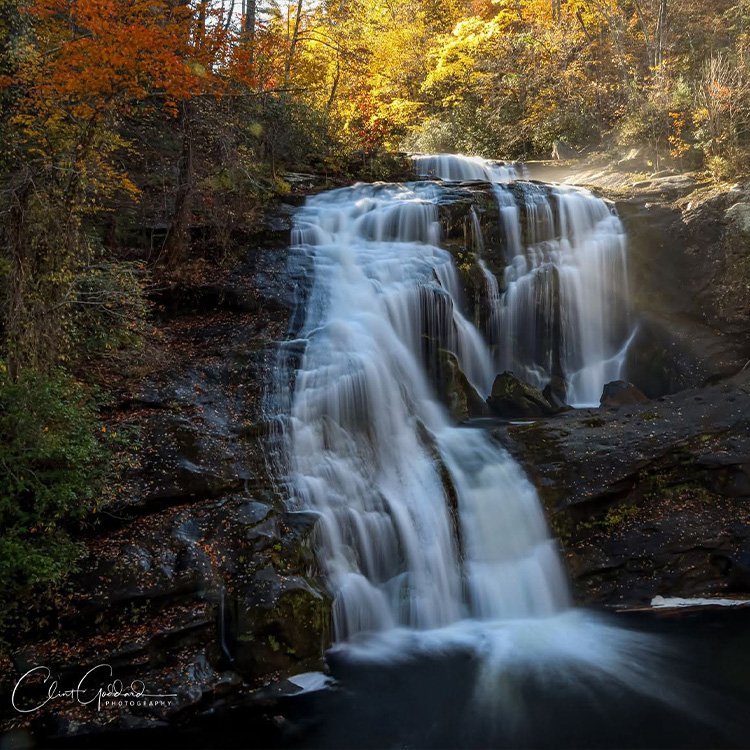
A mountain drive and a large roadside waterfall? That’s the appeal of Bald River Falls near Tellico Plains.
The bridge reopened in 2025 following reconstruction, with a new observation deck. Normally, visitors can see the waterfall without a long hike.
But winter access depends on the mountain roads, so check with Cherokee National Forest before making the drive.
Which Waterfalls Are Easiest to Visit in Winter?
| Waterfall | Walking required | Winter consideration |
|---|---|---|
| Meigs Falls | Roadside | Check road closures |
| Fall Creek Falls | Short paved overlook approach | Avoid icy base trail |
| Twin Falls | Short overlook approach | Sudden water rises in gorge |
| Cataract Falls | About 0.7 mile round trip | Muddy woodland trail |
| Foster Falls | About ¼ mile to upper platform | Steep lower descent |
| Ozone Falls | Short upper approach | Rugged lower trail |
| Burgess Falls | About 1.5 miles round trip | Check parking and trail conditions |
| Machine Falls | Approximately 1.6-mile loop | Uneven, muddy ground |
| Cummins Falls | Upper overlook | Gorge permit and closures |
| Bald River Falls | Roadside | Verify mountain-road access |
For the least walking, start with Meigs Falls, Twin Falls, or the main Fall Creek Falls overlook. Bald River Falls is another option if the road is open. Remember, a short route isn’t necessarily wheelchair-accessible.
My Take
If I were picking one winter waterfall trip, it would be Fall Creek Falls. You get one of the biggest payoffs in the state with almost no walking, and you can make a weekend of it with a park cabin. For something closer to the interstate, Ozone Falls is an easy detour off I-40. Just stay at the top. The view from the top is plenty, and the climb back up a wet gorge in January isn’t worth it.
What to Check Before You Go
Roads first. A park may be open even when the road to a waterfall isn’t. Check the Smokies’ conditions, Tennessee State Parks, or Cherokee National Forest, depending on your destination.
Then check trails and weather. Rain can improve the waterfall view but make trails muddy or streams dangerous. Ice, wet leaves, and shorter daylight hours can turn an easy outing into a difficult one.
Wear shoes with good traction, stay at established viewpoints, and leave yourself plenty of daylight. For more seasonal ideas, explore Tennessee locals’ favorite winter activities.
Sometimes the best winter waterfall trip is the one where you enjoy the view and head home without climbing back up a slippery trail.